Best Apps and Websites to Learn Japanese in 2026: A Teacher’s Picks by Skill

Updated October 2026. Prices change often, so please check each app before you pay. Some links on this page are affiliate links. If you buy through them, I may earn a small commission at no extra cost to you.
There are hundreds of apps for learning Japanese, and many “best app” lists simply rank them from 1 to 10. But as a Japanese teacher, I can tell you a secret: no single app teaches you everything. Duolingo is great for a daily habit, but not for grammar. Anki is amazing for memory, but it doesn’t teach you anything new.
The best plan is a small app stack: one tool for each skill you need. On this page, you will find the best apps and websites for each skill in 2026, with honest pros and cons. Not sure where to start? Try the App Finder first.
Contents
Quick comparison
| App | Best for | Price |
|---|---|---|
| Duolingo | Building a daily habit | Free |
| LingoDeer | A structured first course with grammar | First lessons free |
| Renshuu | A free all-in-one study tool | Free |
| Bunpro | Grammar practice for the JLPT | 30-day free trial |
| Bunpo | Short grammar lessons on your phone | Free |
| WaniKani | Learning kanji with memory stories | First 3 levels free |
| Kanji Memory Hint | Picture hints for beginner kanji | Free |
| Anki | Flashcards you control | Free (iPhone paid) |
| Memrise | Real-life phrases from native speakers | Free with limits |
| JapanesePod101 | Audio lessons for listening | Free account with some lessons |
| Lingopie | Learning with Japanese TV shows | Free trial |
| NHK News Web Easy | Real news in easy Japanese | Free |
| Satori Reader | Stories with notes and audio | Some free stories |
| Jisho.org | A quick online dictionary | Free |
| imiwa? | An offline dictionary for iPhone | Free |
| HelloTalk | Chatting with native speakers | Free |
| italki | Lessons with a real teacher | Pay per lesson (prices set by each teacher) |
| AI chat (ChatGPT, Claude, Gemini) | Speaking and writing practice anytime | Free plans available |
Courses for beginners
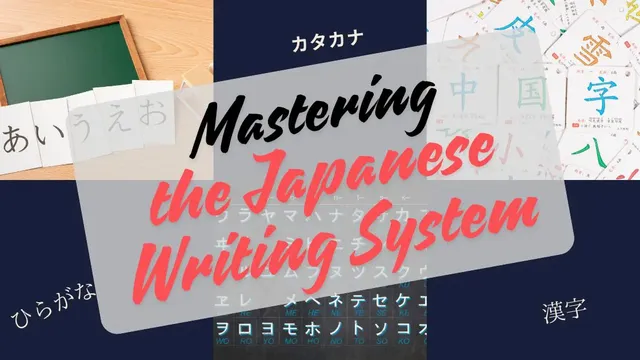
These apps give you a path to follow, so you don’t have to plan your study yourself. They are perfect for your first months. Before you start, learn hiragana and katakana with our free Writing System page: charts with audio, stroke order and games.
1Duolingo
Short, game-like lessons with streaks and points. It is a friendly way to learn kana, first words and simple sentences, and to make Japanese a daily habit.
- Free to start, and really fun
- Good for kana and first words
- Great for daily motivation
- Grammar explanations are short, so use it with a grammar resource
- The free version has ads and limits how much you can practice at once
2LingoDeer

A step-by-step course made for Asian languages. Each unit teaches grammar with clear notes, then practices it with listening, reading and writing exercises.
- Clear grammar notes for beginners
- Lessons follow a logical order
- Can study offline
- Content becomes thinner after the intermediate level
- You need a subscription after the first lessons
3Renshuu
A huge free app for vocabulary, grammar and kanji, with JLPT lists, quizzes and spaced repetition. Many learners use it as their main free tool.
- Very generous free version
- Vocabulary, grammar and kanji in one place
- Organized by JLPT level
- So many options that the screen can feel busy at first
Grammar
Grammar is where most app-only learners get stuck. Use one of these with a clear explanation, like a textbook or our free GENKI-based grammar series, which has a quiz in every lesson.
4Bunpro
You learn a grammar point, then review it in example sentences with spaced repetition. It covers grammar from N5 to N1 and links to good explanations.
- Grammar from N5 to N1, in JLPT order
- You type answers, so you really remember
- Reading passages and vocabulary decks
- Best with a textbook or course, because the explanations are short
5Bunpo
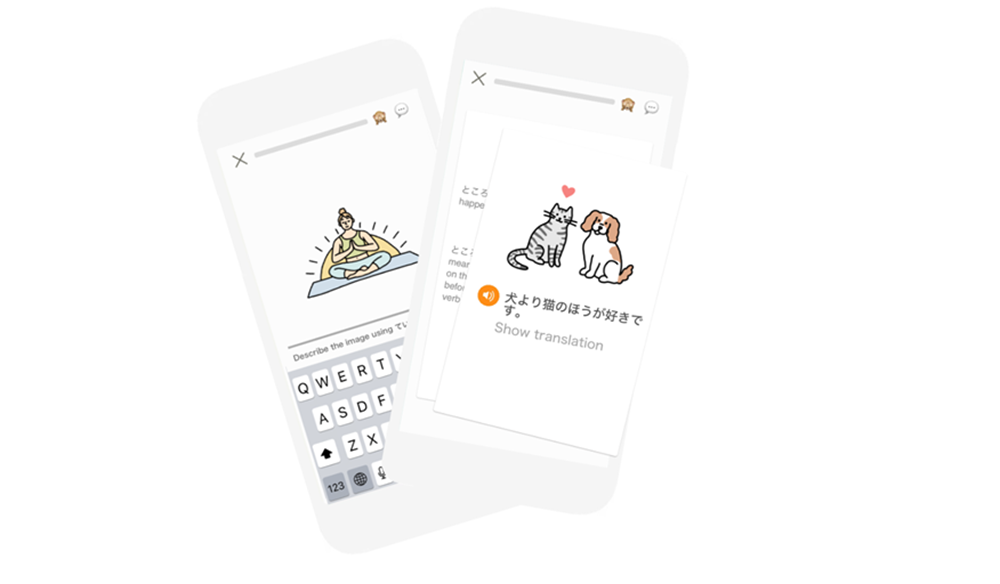
Bite-sized grammar lessons by JLPT level, with example sentences and quizzes. Good for studying in short breaks.
- Easy to use on the train or in short breaks
- Organized by JLPT level
- Many lessons need the paid plan
- The app now teaches other languages too, so Japanese is not its only focus
Kanji and vocabulary
For kanji, the method matters more than the app. Read How to Learn Kanji: 7 Smart Strategies first, then choose a tool that fits your style.
6WaniKani
WaniKani teaches more than 2,000 kanji and thousands of words in a fixed order. Every kanji is built from parts, with a funny memory story and spaced reviews.
- Very clear system, you just follow it
- Memory stories for every kanji
- Teaches vocabulary with each kanji
- The speed is fixed, so it can feel slow at the start
- Uses its own names for kanji parts
7Kanji Memory Hint
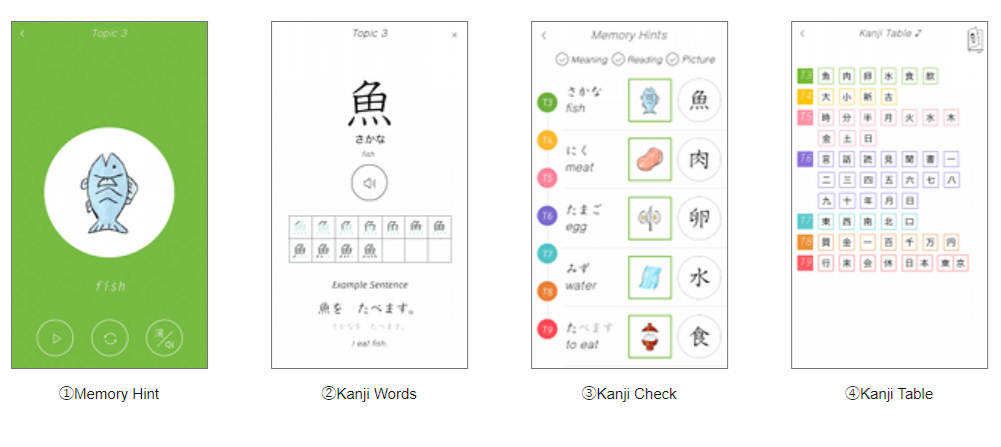
Three free apps from the Japan Foundation that teach beginner kanji with pictures, sounds, animations and simple games.
- Free, from a trusted source
- Picture hints make kanji easy to remember
- Covers basic kanji only
- Not updated often
8Anki
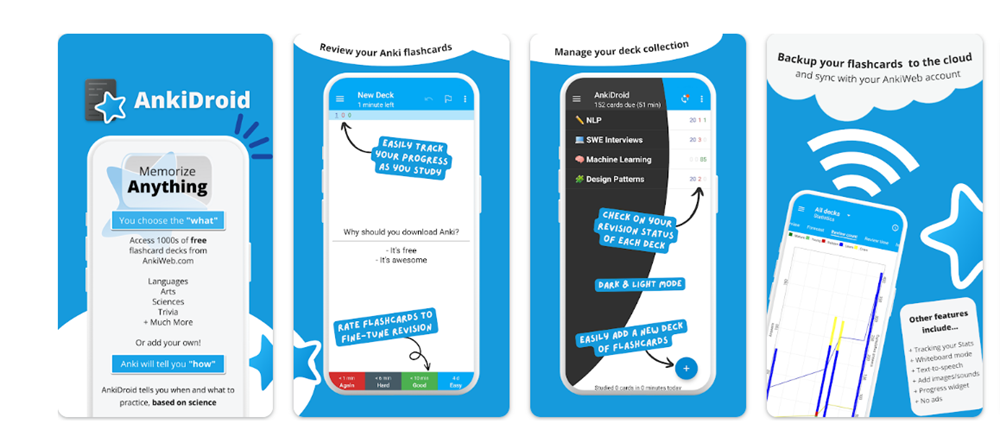
The most powerful flashcard app. It uses spaced repetition to show each card just before you forget it. Make your own cards or download free decks.
- Free on most devices
- You can study anything: kanji, words, sentences
- Huge library of shared decks
- Takes some time to set up
- Plain design, and it is easy to add too many cards
9Memrise
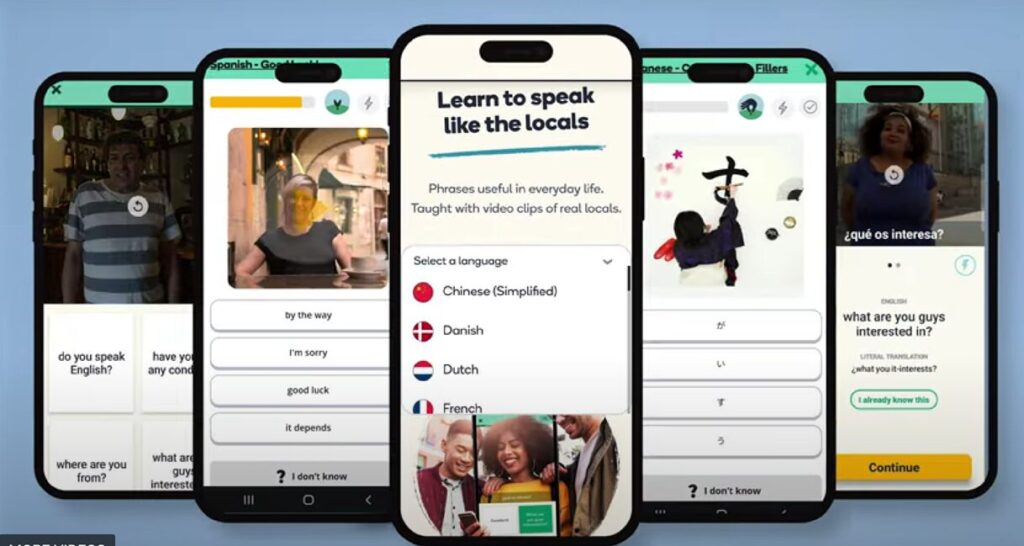
Memrise teaches useful words and phrases with short videos of native speakers, and now has AI conversation practice.
- Hear real people, not just a robot voice
- Good for travel phrases
- The app has changed a lot: user-made courses moved to a separate site in 2024
- Less useful for grammar
Listening and watching
Your ears need lots of practice too. Listen a little every day, even for 10 minutes.
10JapanesePod101
Thousands of audio and video lessons from absolute beginner to advanced, each with a dialogue, explanations and a transcript.
- A very large library of lessons
- Great for listening on your commute
- Lots of sales emails
- So many lessons that it is hard to choose: follow one series
11Lingopie
Watch Japanese shows and movies with Japanese and English subtitles. Tap a word to see the meaning and save it as a flashcard.
- Fun way to get lots of listening
- Dual subtitles and saved words
- Best for learners who already know some basics
Reading and dictionaries
Reading real Japanese is the best way to remember kanji and grammar. Start with easy texts, and keep a dictionary close.
12NHK News Web Easy
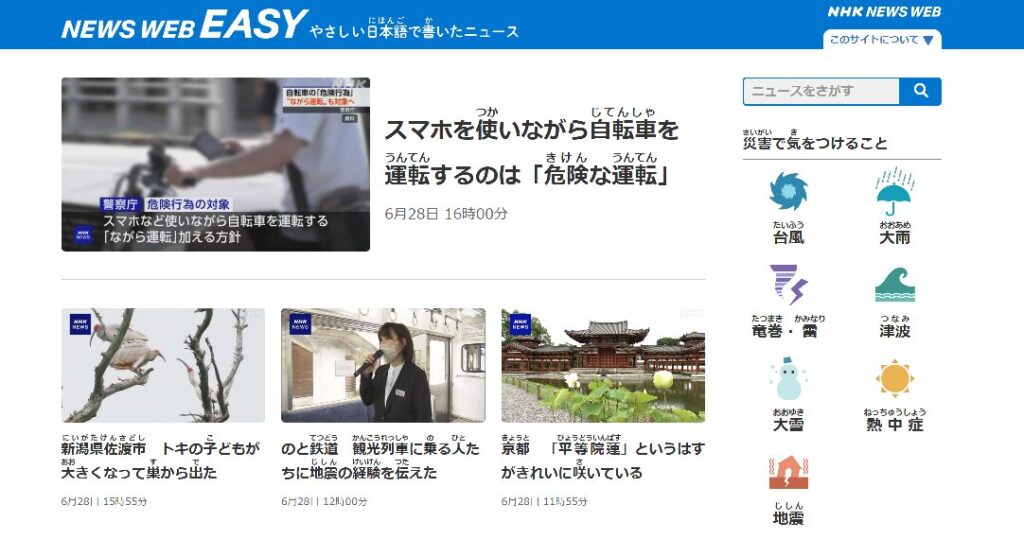
Daily news from NHK, rewritten in easier Japanese. Every kanji has furigana, and you can listen to the article.
- Free and new every weekday
- Furigana and audio on every article
- No English translation, so it is best from around N4
13Satori Reader
Original stories written for learners, with native audio, a translation for each sentence, and teacher notes that explain grammar and culture.
- Excellent explanations
- Furigana you can turn on and off
- Best from upper beginner level
14Jisho.org
A fast, free dictionary. Search in English, romaji or Japanese, find kanji by their parts or by drawing them, and see example sentences.
- Free and very fast
- Search kanji by parts or by drawing
- Needs an internet connection
15imiwa?
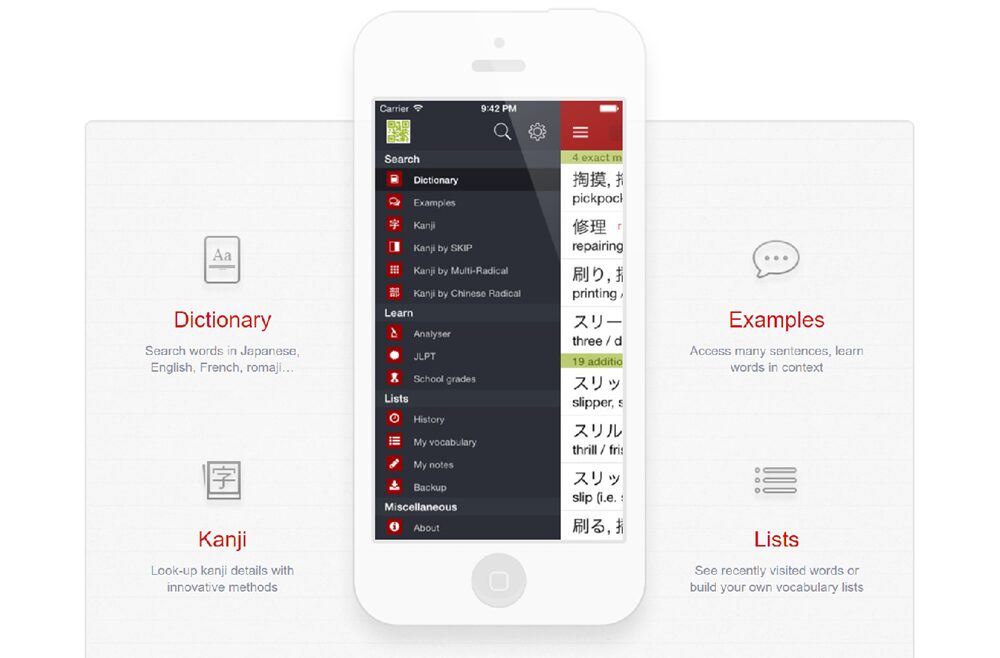
A free offline dictionary with example sentences, kanji details and verb conjugation tables.
- Free and works offline
- Verb conjugation tables
- Apple devices only
Speaking
Apps can’t speak for you. At some point you need to open your mouth and talk. Here are three ways to practice, from free to paid.
16HelloTalk
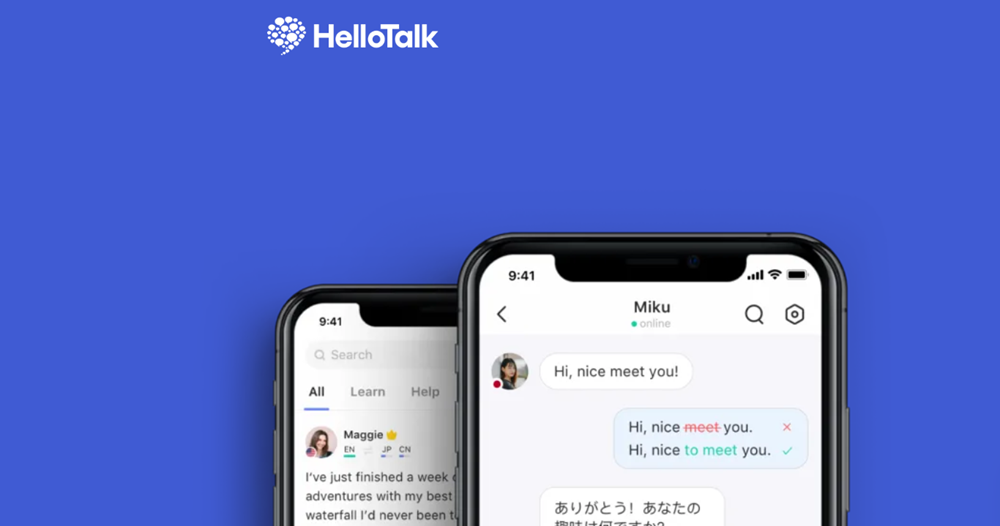
A language exchange app. You help Japanese speakers with your language, and they help you with Japanese, by text, voice or call.
- Free practice with real people
- Built-in correction and translation tools
- Conversations can be random
- Never share private information with people you just met
17italki
Book one-on-one online lessons with Japanese teachers and tutors. You can choose by price, schedule and teaching style, and start with a short trial lesson.
- Personal feedback on your speaking
- Lessons at any time of day
- Costs more than an app
- Try a few teachers to find a good match
18AI chat (ChatGPT, Claude, Gemini)
AI chat assistants can be a patient conversation partner. Ask them to talk at your level, correct your mistakes, or explain grammar in simple English.
- Available 24 hours a day
- Can adjust to your level and interests
- Sometimes makes mistakes, so check important points
- Not the same as talking with a real person
Example app stacks
Here are some combinations that work well. Keep your stack small: two or three tools you use every day are better than ten apps you forget.
- Writing System page (kana)
- Duolingo (daily habit)
- Renshuu (vocabulary and grammar)
- Your textbook + our grammar series
- Bunpro (grammar review)
- Anki (vocabulary from each lesson)
- WaniKani or Anki (kanji)
- Bunpro (grammar)
- NHK News Web Easy or Satori Reader (reading)
- Travel Japanese Pack (phrases)
- Memrise (native speaker videos)
- A few italki lessons (speaking)
3 mistakes people make with language apps
- Only using one app. Most apps are strong in one skill. Mix a course, a review tool and some real Japanese.
- Chasing streaks instead of progress. A 300-day streak is great, but ask yourself: can I read and say more than last month?
- Staying with romaji. Turn off romaji as early as you can. Your eyes need to get used to kana and kanji.
FAQ
What is the best free app to learn Japanese?
For a free all-in-one tool, Renshuu is hard to beat. Duolingo is great for building a habit, Anki is the best free flashcard app, and NHK News Web Easy is a great free reading resource.
Can I become fluent with apps only?
Apps can take you surprisingly far in reading and vocabulary. But to speak naturally, you need real conversation practice, with a language partner, an AI chat partner, or a teacher.
Is Duolingo good for Japanese?
It is good for starting and for daily motivation. But its grammar explanations are short, so use it together with a grammar resource such as a textbook, Bunpro, or our free grammar lessons.
Which app is best for the JLPT?
Use Bunpro for grammar and WaniKani or Anki for kanji and vocabulary. Add reading practice with NHK News Web Easy or Satori Reader, and do some official practice tests before the exam.
Practice speaking with a real teacher
Apps are great for input, but speaking needs a real person. On italki, you can find Japanese teachers for every level and budget and book a short trial lesson.
This is an affiliate link. If you book a lesson, I may earn a small commission at no extra cost to you.