Japanese Past Short Form (た Form) Made Easy (GENKI Lesson 9)
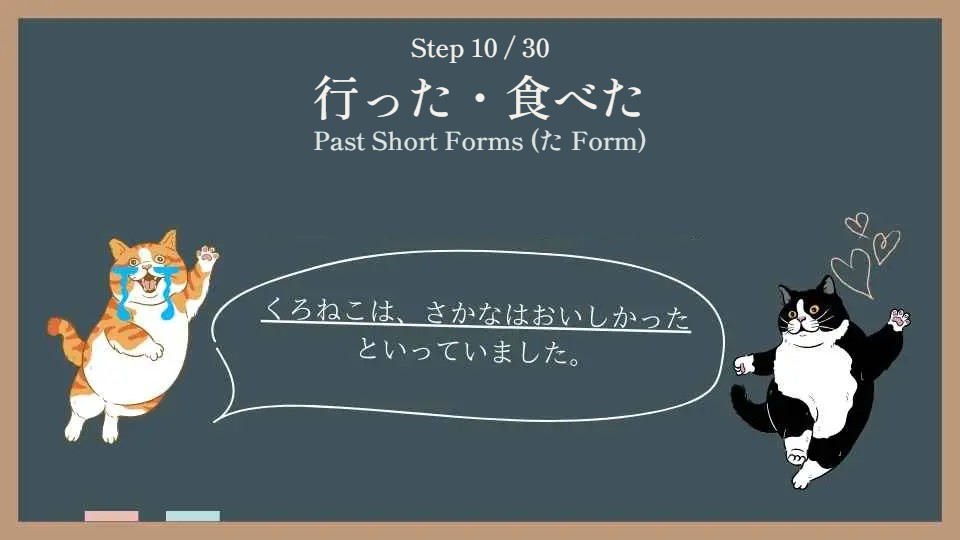
In Lesson 8, you learned the present short form. In GENKI Lesson 9, you learn its past form. If you know the te-form well, this is easy: just change て to た and で to だ.
- Past short forms of verbs (the た form), adjectives and nouns
- Talking about the past in casual speech
- Past events with と思います and と言っていました
- Describing a person with a verb: めがねをかけている人
- もう (already) and まだ (not yet)
Contents
The past short form
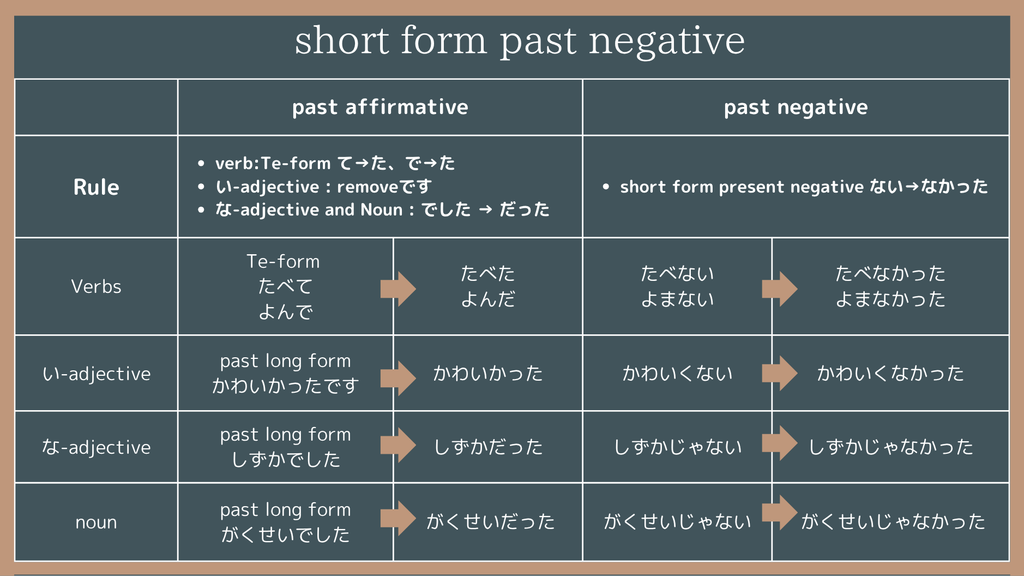
For verbs, take the te-form and change the last sound: て → た, で → だ.
| te-form | past short form | Meaning |
|---|---|---|
| 食べてたべて | 食べたたべた | ate |
| 飲んでのんで | 飲んだのんだ | drank |
| 行っていって | 行ったいった | went |
| してして | したした | did |
| 来てきて | 来たきた | came |
The negative: change ない to なかった. Adjectives and nouns follow the same idea.
| Type | Past affirmative | Past negative |
|---|---|---|
| verb | 行ったいった | 行かなかったいかなかった |
| い-adjective | 高かったたかかった | 高くなかったたかくなかった |
| な-adjective | 静かだったしずかだった | 静かじゃなかったしずかじゃなかった |
| noun | 学生だったがくせいだった | 学生じゃなかったがくせいじゃなかった |
Polite past without です: 高かったです → 高かった. For な-adjectives and nouns, でした → だった.
Casual past speech
Past events with と思います and と言っていました
Put the past short form before と思います to guess about something that happened. 思います stays in the present because you are thinking it now.
To report what someone said about the past, use と言っていました.
〜と思います is what you think now. 〜と思いました is what you thought at a moment in the past: 簡単だと思いました (I thought it was easy … but it wasn’t).
Describing a person with a verb
A verb in short form can come before a noun to describe it, like “the person who …” in English.
もう and まだ
“Not yet” is まだです or まだ〜ていません. Don’t say まだしませんでした. That sounds like you are sure you won’t do it.
Final check: 10 questions
These questions mix everything from Lesson 9. Get 8 or more right, and you are ready for comparisons in Lesson 10.
Free worksheet
Want to practice writing? Download the printable worksheet for GENKI Lesson 9.
What’s next
- GENKI Lesson 10: comparisons with より and いちばん
- GENKI Lesson 8: review present short forms
- Cebu travel diary: read a diary written in short forms (JLPT N4)
Practice speaking with a real teacher
Tell a teacher what you did last weekend, first politely and then casually: 映画を見ました → 映画を見た。 On italki, you can find teachers who use GENKI and book a short trial lesson.
This is an affiliate link. If you book a lesson, I may earn a small commission at no extra cost to you.