Japanese Short Forms: と思います and と言っていました (GENKI Lesson 8)
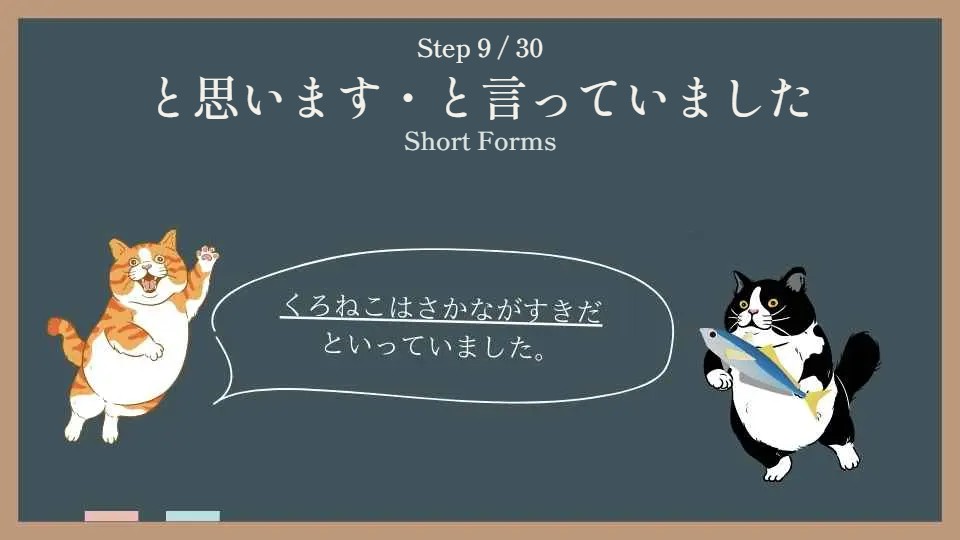
GENKI Lesson 8 introduces the short form (also called the plain or casual form). Friends and family use it when they talk, and many grammar patterns are built on it. Once you know it, you can say what you think, report what others said, and talk about your hobbies.
- Present short forms of verbs, い-adjectives, な-adjectives and nouns
- When to use casual speech, and when not to
- 〜と思います: I think …
- 〜と言っていました: someone said …
- 〜ないでください and 〜のが好きです
Contents
The short form: present tense
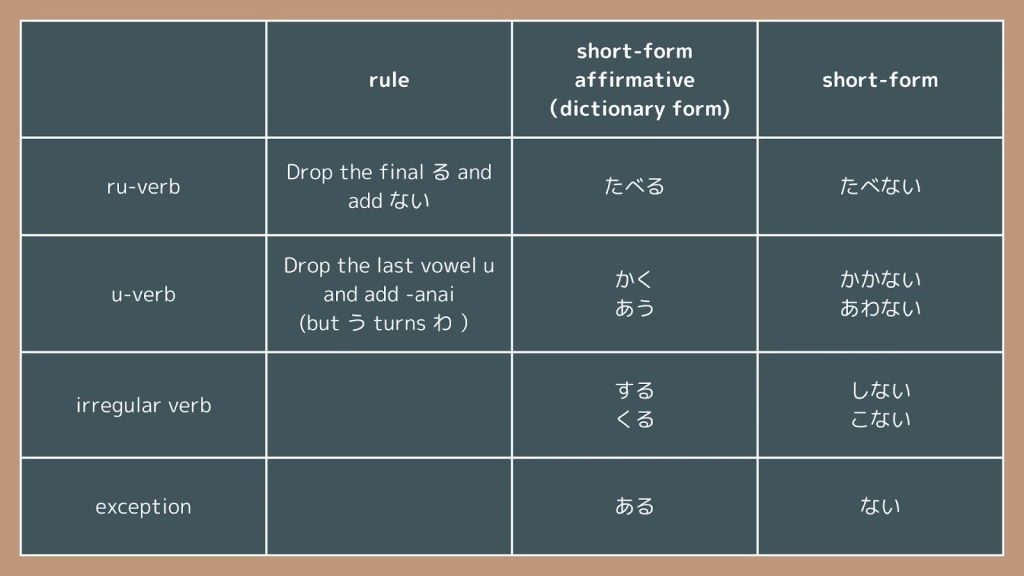
The affirmative short form of a verb is the dictionary form. The negative is the ない form.
| Verb group | Rule for ない | Example |
|---|---|---|
| る-verbs | drop る → ない | 食べる → 食べないたべる → たべない |
| う-verbs | last sound → あ sound + ない | 行く → 行かない、飲む → 飲まないいく → いかない、のむ → のまない |
| う-verbs ending in う | う → わ + ない | 買う → 買わないかう → かわない |
| Irregular | する → しない、来る → こないする → しない、くる → こない | |
| ある | ある → ないある → ない |
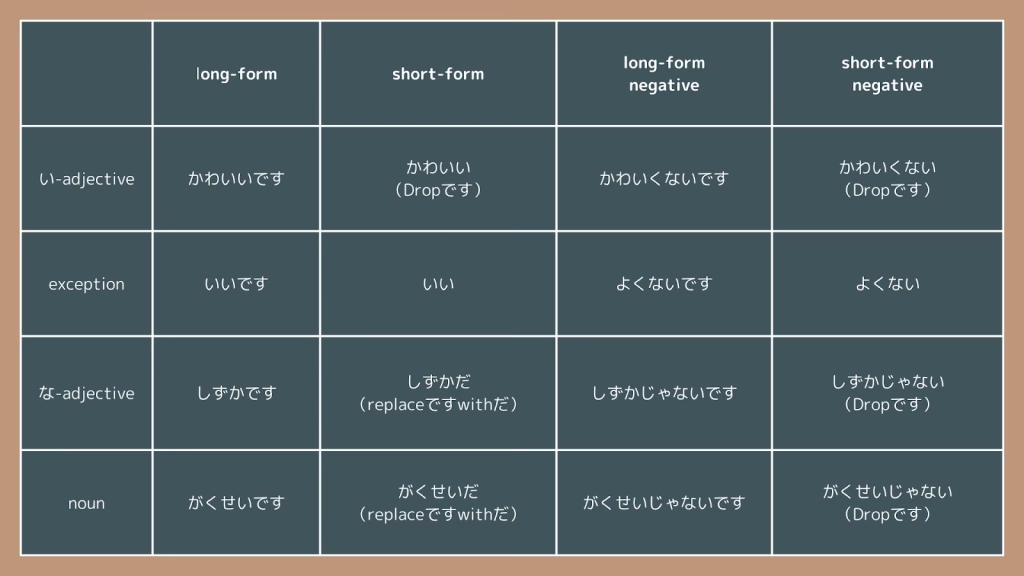
Adjectives and nouns:
| Type | Affirmative | Negative |
|---|---|---|
| い-adjective | 高いたかい | 高くないたかくない |
| な-adjective | 静かだしずかだ | 静かじゃないしずかじゃない |
| noun | 学生だがくせいだ | 学生じゃないがくせいじゃない |
Take the polite form and drop です: 高いです → 高い, 高くないです → 高くない. For な-adjectives and nouns, です becomes だ.
Casual speech
In casual conversation, people simply use the short form instead of です and ます.
- Use the short form with friends, family and people younger than you.
- Use the polite form (です/ます) with teachers, your boss, customers and people you just met.
- A teacher or boss may talk to you in short form. You still answer politely: 先生「おもしろい?」→ 学生「はい、とてもおもしろいです。」
- In casual questions, people usually drop だ and か: 学生? (Are you a student?)
〜と思います: I think …
Put the short form before と思います (to omoimasu) to say what you think.
With な-adjectives and nouns, だ is needed before と思います: 上手だと思います, 学生だと思います.
〜と言っていました: someone said …
To report what someone said, use the short form + と言っていました (to itte imashita).
〜ないでください: please don’t …
Add でください to the ない form to ask someone not to do something.
〜のが好きです: I like doing …
Add の to a verb’s short form, and it becomes a noun (“doing …”). Then you can use it with 好き, きらい, 上手 and 下手.
Final check: 10 questions
These questions mix everything from Lesson 8. Get 8 or more right, and you are ready for the past short form in Lesson 9.
Free worksheet
Want to practice writing? Download the printable worksheet for GENKI Lesson 8.
What’s next
- GENKI Lesson 9: past short forms
- GENKI Lesson 7: review 〜ている
- Is “anata” rude?: more about polite and casual Japanese
Practice speaking with a real teacher
Switching between polite and casual Japanese takes practice with real people. Ask a teacher to have a short casual chat with you, then a polite one. On italki, you can find teachers who use GENKI and book a short trial lesson.
This is an affiliate link. If you book a lesson, I may earn a small commission at no extra cost to you.