Japanese 〜ている: Actions in Progress and Describing People (GENKI Lesson 7)
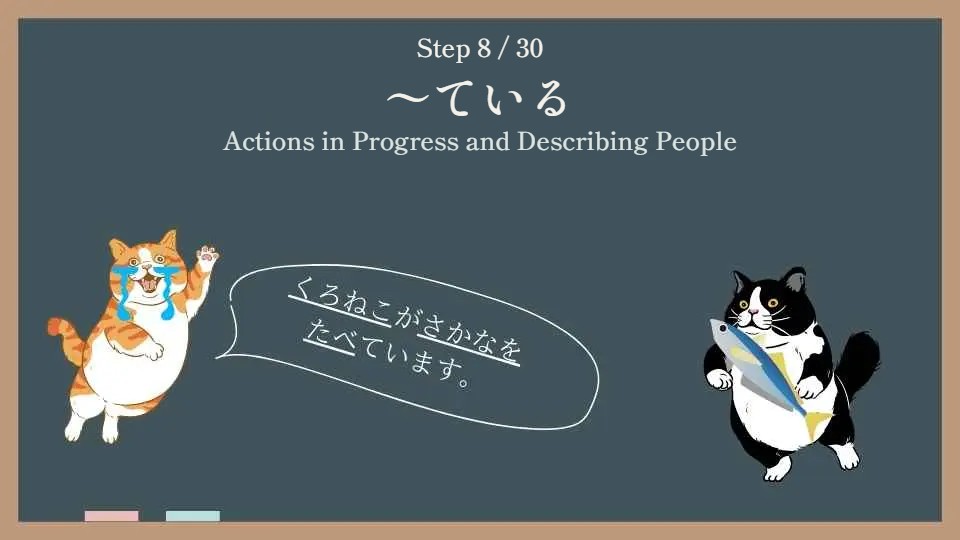
In GENKI Lesson 7, you use the te-form from Lesson 6 to make 〜ている. It can mean “is doing” (right now) or describe a state, like being married or living somewhere. You will also learn how to describe what people look like and how to join adjectives.
- 〜ている for actions in progress
- 〜ている for a state that results from a change
- Describing people: Xは Yが Adjective
- Joining adjectives and nouns: くて / で
- Going somewhere to do something: stem + に いく
Contents
〜ている: an action in progress
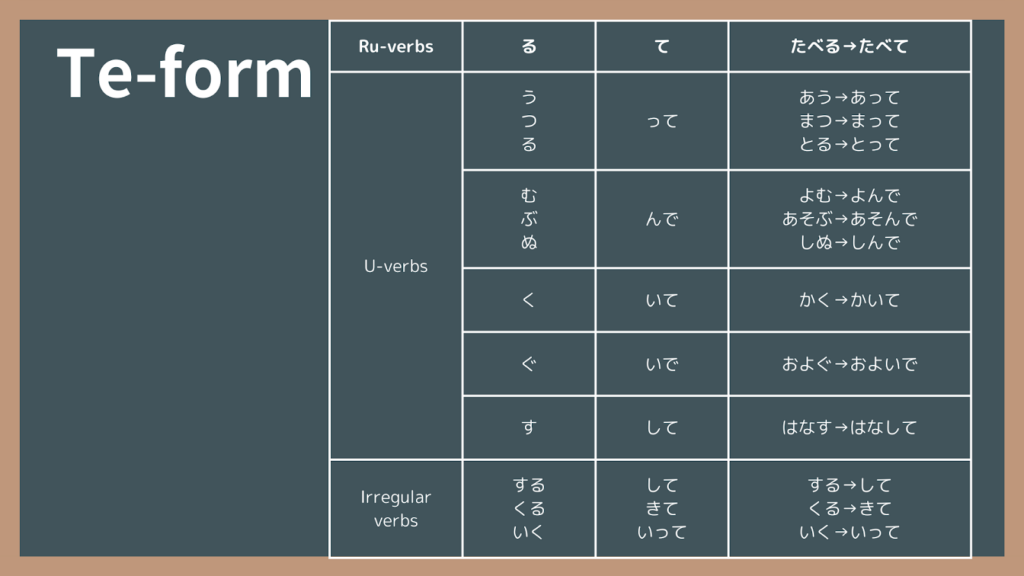
Take the te-form and add いる (polite: います). The first meaning is like English “-ing”: something is happening right now.
It can also mean a habit: まいにち ジムで うんどうしています (I work out at the gym every day).
Negative: 〜ていません. いま、テレビを みていません (I’m not watching TV now).
〜ている: a state after a change
Some verbs describe a change that happens in a moment: to get married, to go to, to come to know. With these verbs, 〜ている means the result is still true.
| Verb | 〜ている | Meaning |
|---|---|---|
| けっこんするkekkon suru (to get married) | けっこんしていますkekkon shite imasu | is married |
| すむsumu (to start living) | とうきょうに すんでいますTookyoo ni sunde imasu | lives in Tokyo |
| しるshiru (to come to know) | しっていますshitte imasu | knows |
| ふとるfutoru (to gain weight) | ふとっていますfutotte imasu | is fat (heavy) |
| やせるyaseru (to lose weight) | やせていますyasete imasu | is thin |
| きるkiru (to put on) | Tシャツを きていますtiishatsu o kite imasu | is wearing a T-shirt |
| つとめるtsutomeru (to start working for) | ぎんこうに つとめていますginkoo ni tsutomete imasu | works for a bank |
This one is tricky. “I know” is しっています, but “I don’t know” is しりません, not しっていません.
Describing people: かみが ながいです
To describe a part of a person, use person は + part が + adjective. Literally, “As for Mary, her hair is long.”
Joining adjectives: くて and で
To say “A and B” with adjectives, change the first one to its te-form.
| Type | Rule | Example |
|---|---|---|
| い-adjective | い → くて | やすくて おいしいですyasukute oishii desu (cheap and delicious) |
| いい | いい → よくて | あたまが よくて やさしいですatama ga yokute yasashii desu (smart and kind) |
| な-adjective | + で | きれいで しずかですkirei de shizuka desu (clean and quiet) |
| noun | + で | にほんじんで がくせいですnihonjin de gakusei desu (Japanese and a student) |
Going somewhere to do something: stem + に いく
Take the ます form, drop ます, and add に いく / くる / かえる. It means “go (somewhere) to do …”.
This is the same purpose に you saw in 旅行にいく.
Final check: 10 questions
These questions mix everything from Lesson 7. Get 8 or more right, and you are ready for short forms in Lesson 8.
Free worksheet
Want to practice writing? Download the printable worksheet for GENKI Lesson 7.
What’s next
- GENKI Lesson 8: short forms, と思います and と言っていました
- GENKI Lesson 6: review the te-form
- Cebu travel diary: reading practice with 〜ている
Practice speaking with a real teacher
Try describing your family to a teacher: あには とうきょうに すんでいます。せが たかくて、やさしいです。 On italki, you can find teachers who use GENKI and book a short trial lesson.
This is an affiliate link. If you book a lesson, I may earn a small commission at no extra cost to you.