Japanese Te-Form: てください and てもいいですか (GENKI Lesson 6)
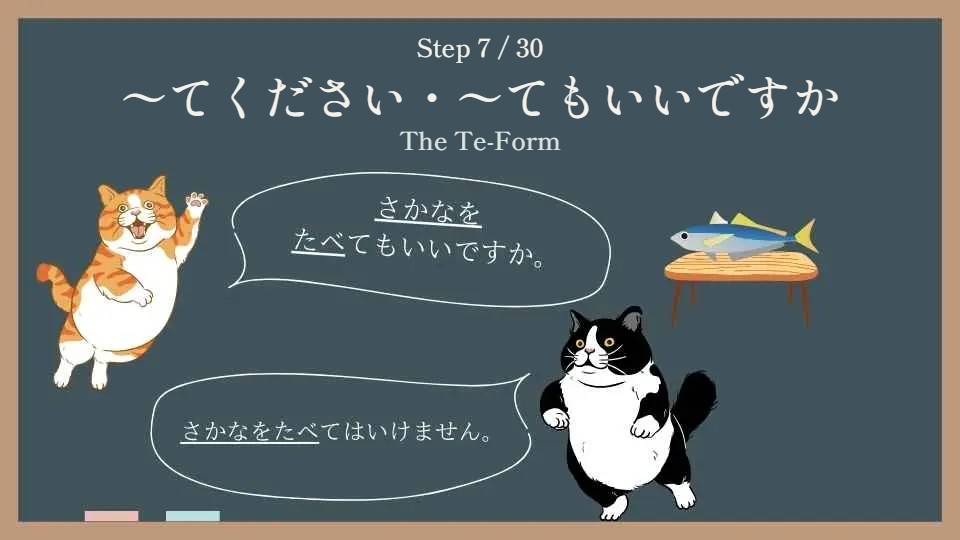
The te-form is one of the most important verb forms in Japanese. In GENKI Lesson 6, you learn how to make it, and then you use it right away to ask for things, ask for permission, say what is not allowed, and connect actions.
The rules look long at first. Practice with the drill below until the sounds feel natural. Many learners memorize them as a song!
- How to make the te-form of any verb
- 〜てください: please do …
- 〜てもいいですか: may I …?
- 〜てはいけません: you must not …
- Joining actions with the te-form, and giving reasons with から
Contents
How to make the te-form
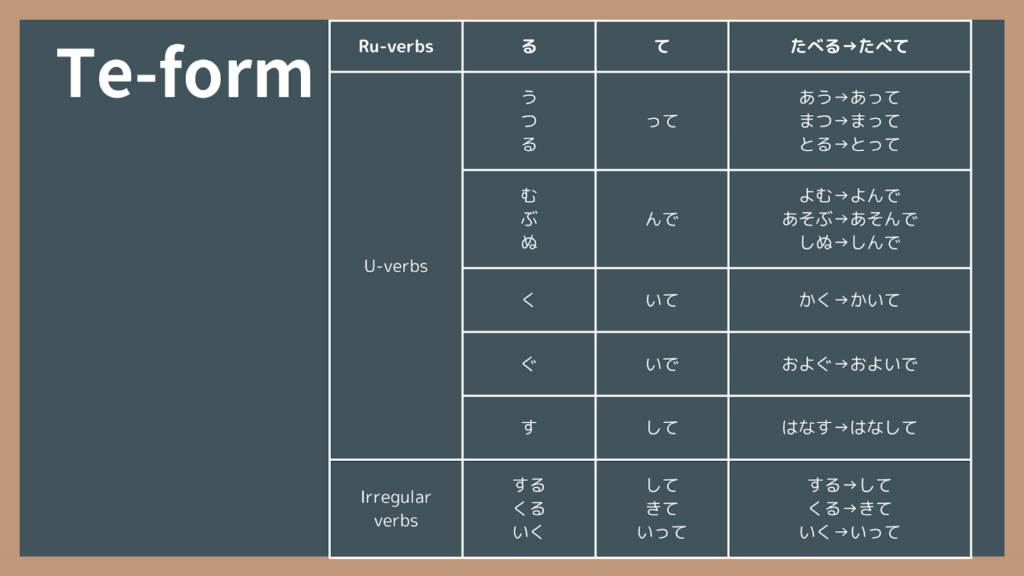
る-verbs are easy: drop る and add て. For う-verbs, look at the last sound of the dictionary form.
| Last sound | Change | Example |
|---|---|---|
| う・つ・る | → って | かう → かって、まつ → まって、かえる → かえってkatte, matte, kaette |
| む・ぶ・ぬ | → んで | のむ → のんで、あそぶ → あそんで、しぬ → しんでnonde, asonde, shinde |
| く | → いて | かく → かいてkaite |
| ぐ | → いで | いそぐ → いそいでisoide |
| す | → して | はなす → はなしてhanashite |
| る-verbs | drop る → て | たべる → たべて、みる → みてtabete, mite |
| Irregular | する → して、くる → きてshite, kite | |
| Exception | いく → いって (not いいて)itte |
The te-form has the same sound changes as the past short form you will learn later: のんで → のんだ, かいて → かいた. Learn it well now, and Lesson 9 will be easy.
What you can do with the te-form
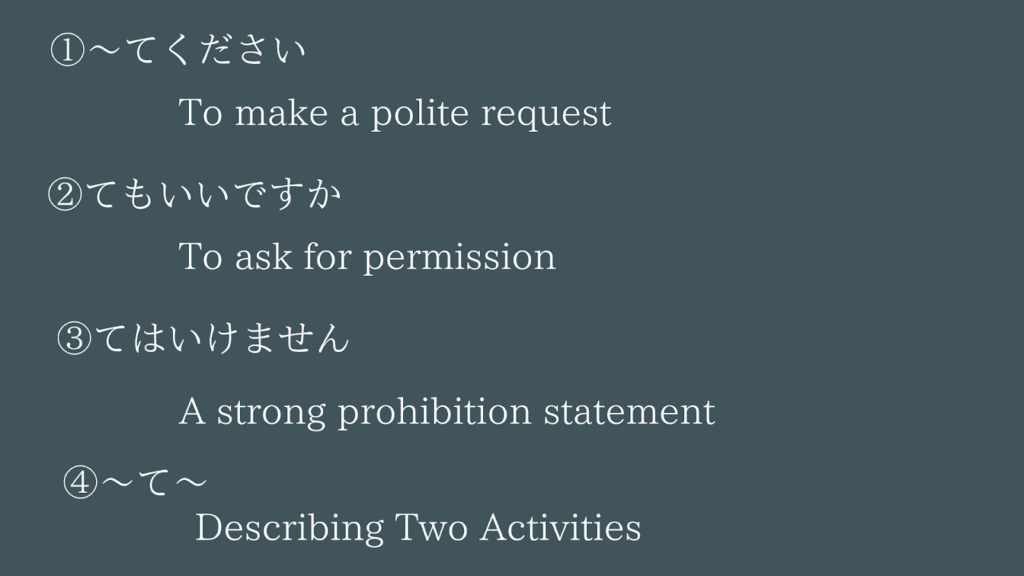
〜てください: please do …
Here いって comes from いう (to say). いく (to go) also becomes いって. The context tells you which one it is.
〜てもいいですか: may I …?
〜てはいけません: you must not …
This is a strong “no.” You see it on rules and signs.
When someone asks 〜てもいいですか and the answer is no, people usually say すみません、ちょっと… rather than いけません. いけません sounds like a rule.
Joining actions: A て、B
Use the te-form to connect actions in order: “I did A, and then B.” Only the last verb shows the tense.
から: because
In GENKI Lesson 6, you also learn から. Put it after the reason. The reason comes first.
Learn more ways to give a reason in から, ので and んです.
〜ましょうか: shall I …?
To offer help, use the ます stem + ましょうか.
Final check: 10 questions
These questions mix everything from Lesson 6. Get 8 or more right, and you are ready for 〜ている in Lesson 7.
Free worksheet
Want to practice writing? Download the printable worksheet for GENKI Lesson 6.
What’s next
- GENKI Lesson 7: 〜ている and describing people
- GENKI Lesson 5: review adjectives
- Essential Japanese Phrases: てください phrases for travel
Practice speaking with a real teacher
The te-form is everywhere in real conversation. Practice polite requests with a teacher: もう いちど いってください。ゆっくり はなしてください。 On italki, you can find teachers who use GENKI and book a short trial lesson.
This is an affiliate link. If you book a lesson, I may earn a small commission at no extra cost to you.