Japanese い-Adjectives vs な-Adjectives, すき and きらい (GENKI Lesson 5)
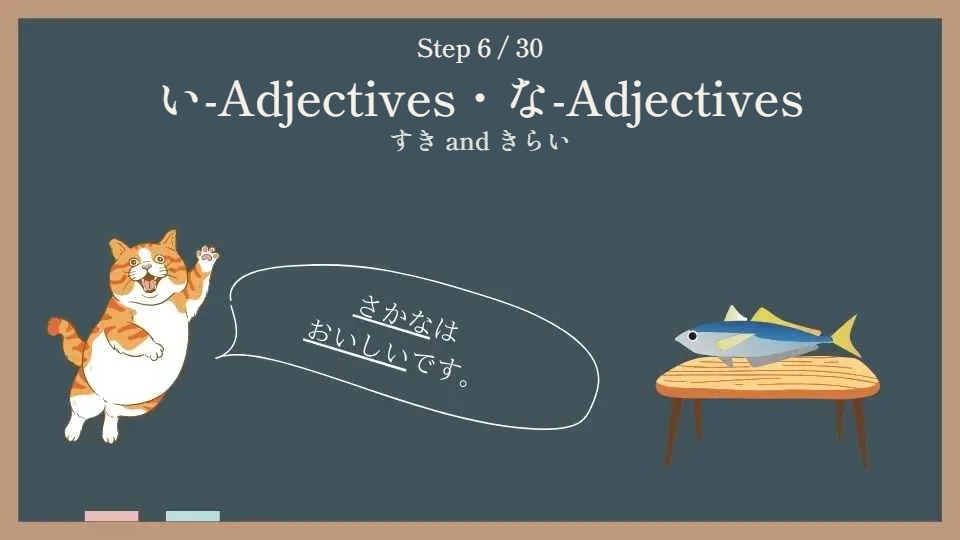
In GENKI Lesson 5, you learn how to describe things: a cheap restaurant, a quiet town, a fun weekend. Japanese adjectives change their endings for the negative and the past, just like verbs. Once you learn the two patterns, you can describe almost anything.
- The two kinds of adjectives: い-adjectives and な-adjectives
- Present, negative, past and past negative forms
- The special adjective いい
- Putting an adjective before a noun
- Likes and dislikes with すき and きらい
Contents
Two kinds of adjectives
| Type | What it looks like | Examples |
|---|---|---|
| い-adjectives | End in い | たかい (expensive), おいしい (delicious), さむい (cold), おもしろい (interesting) |
| な-adjectives | Take な before a noun | しずか(な) (quiet), げんき(な) (healthy, energetic), すき(な) (to like), ゆうめい(な) (famous) |
A few な-adjectives also end in い: きれい (pretty, clean) and ゆうめい (famous). GENKI marks them with (な), so learn the type with the word.
い-adjectives
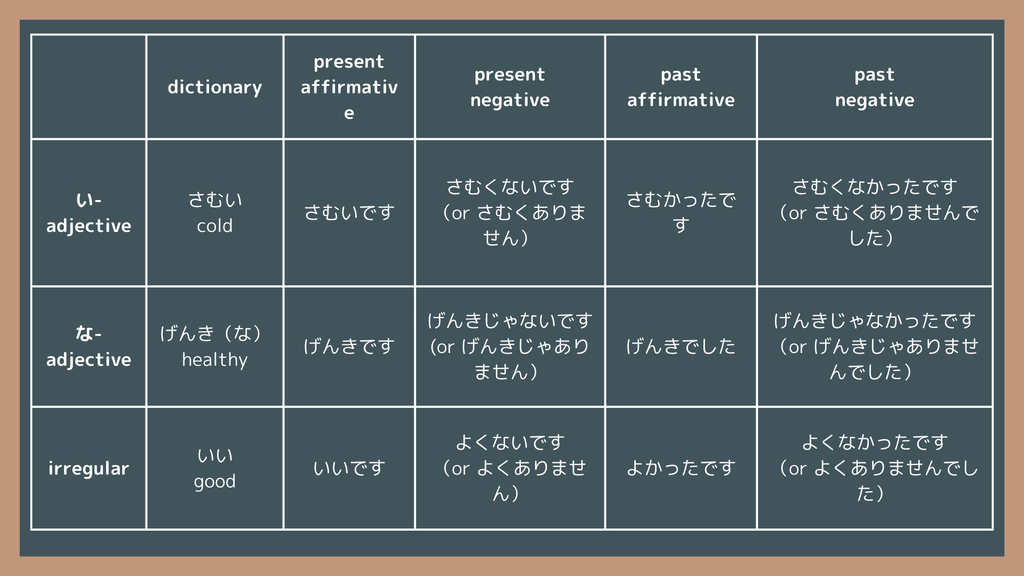
For the present, just add です. For other forms, take off the last い and add a new ending.
| Form | Ending | Example |
|---|---|---|
| Present | い + です | たかいですtakai desu (is expensive) |
| Negative | い → くない + です | たかくないですtakakunai desu (is not expensive) |
| Past | い → かった + です | たかかったですtakakatta desu (was expensive) |
| Past negative | い → くなかった + です | たかくなかったですtakakunakatta desu (was not expensive) |
いい (good) changes to よ in every form except the present: よくないです (not good), よかったです (was good), よくなかったです (was not good).
な-adjectives
な-adjectives change just like nouns with です. If you know でした and じゃなかったです, you already know this pattern.
| Form | Ending | Example |
|---|---|---|
| Present | です | しずかですshizuka desu (is quiet) |
| Negative | じゃないです | しずかじゃないですshizuka ja nai desu (is not quiet) |
| Past | でした | しずかでしたshizuka deshita (was quiet) |
| Past negative | じゃなかったです | しずかじゃなかったですshizuka ja nakatta desu (was not quiet) |
Adjective + noun
To put an adjective right before a noun: い-adjectives go as they are. な-adjectives need な.
| Type | Pattern | Example |
|---|---|---|
| い-adjective | adjective + noun | たかい とけいtakai tokei (an expensive watch) |
| な-adjective | adjective + な + noun | しずかな まちshizuka na machi (a quiet town) |
すき and きらい: likes and dislikes
すき(な) (to like) and きらい(な) (to dislike) are な-adjectives in Japanese. The thing you like is marked with が, not を.
きらいです is quite strong. Many people say あまり すきじゃないです (I don’t like it very much) to be softer.
Final check: 10 questions
These questions mix everything from Lesson 5. Get 8 or more right, and you are ready for the te-form in Lesson 6.
Free worksheet
Want to practice writing? Download the printable worksheet for GENKI Lesson 5.
What’s next
- GENKI Lesson 6: the te-form, てください and てもいいですか
- GENKI Lesson 4: review the past tense
- Comparisons: “more … than” with adjectives
Practice speaking with a real teacher
Adjectives make your Japanese come alive. Tell a teacher about your town: わたしの まちは しずかです。でも、ちょっと ふべんです。 On italki, you can find teachers who use GENKI and book a short trial lesson.
This is an affiliate link. If you book a lesson, I may earn a small commission at no extra cost to you.