Japanese から vs ので vs んです: How to Give Reasons (GENKI Lessons 9, 12)
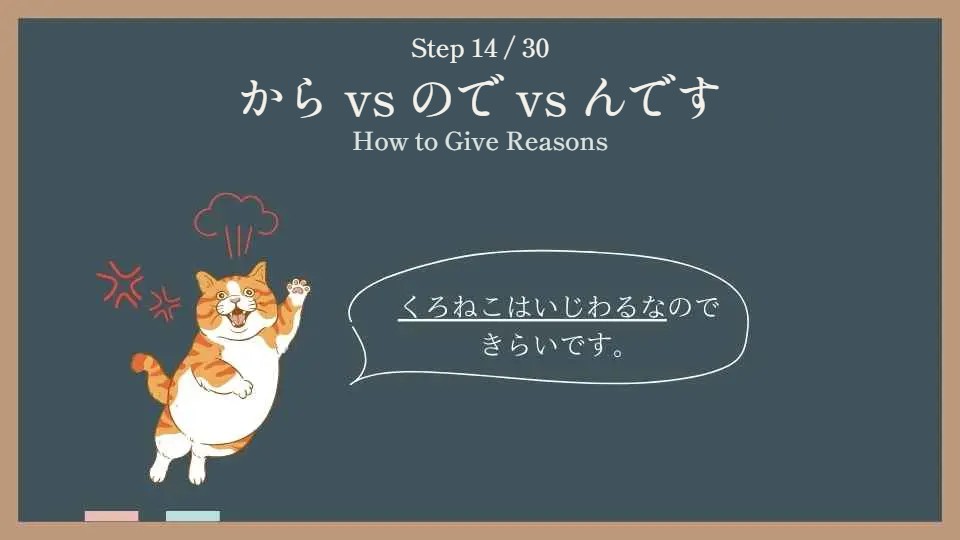
When you explain why, Japanese gives you three useful tools. から is the basic “because.” ので is softer and more polite. んです adds the feeling of “you see, the thing is ….” In this lesson, you will learn how to make each one and when to use it.
- から: because, so
- ので: since (softer)
- んです: explaining a situation, or asking for an explanation
Contents
から: because
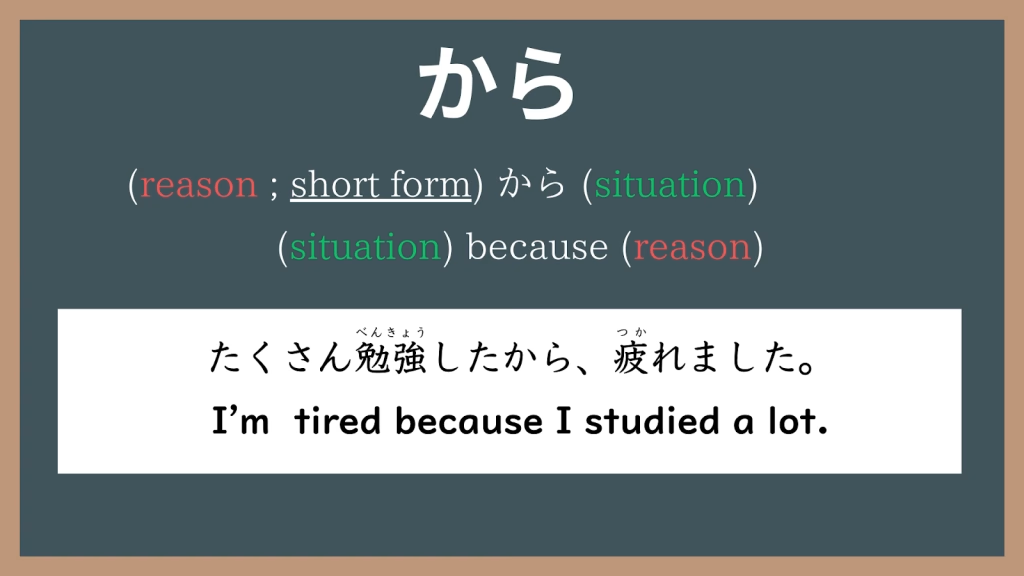
The reason comes first, then から, then the result. This is the opposite of English “I study every day because Japanese is difficult.” The sentence before から can be in the polite form or the short form.
You can also put から at the end: どうして行かないんですか。— お金がないからです。 (Why aren’t you going? — Because I don’t have money.)
ので: since (softer)
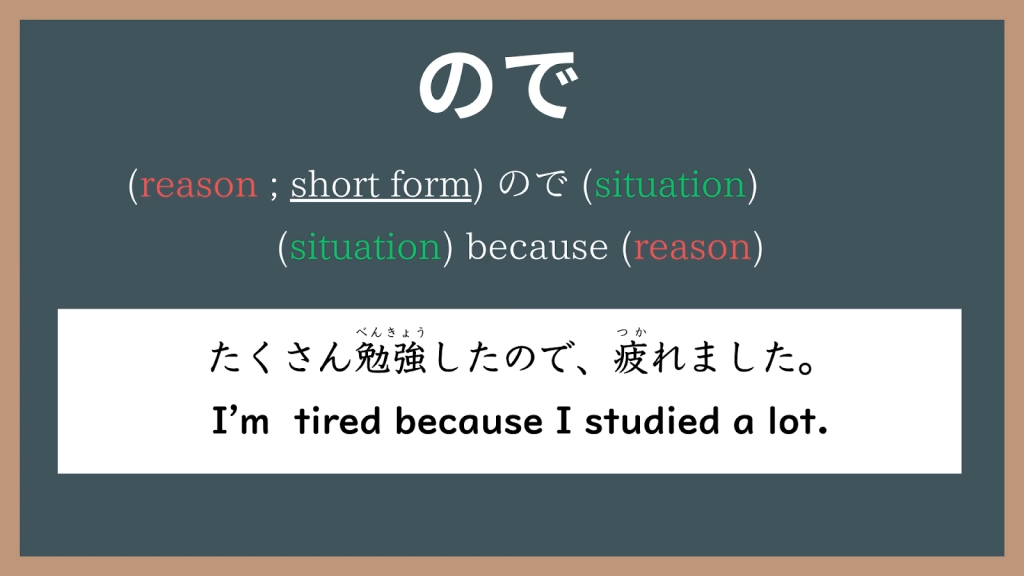
ので means the same as から, but it sounds softer and more polite. It is often used when you ask for something or say sorry, because it sounds less like you are demanding.
Before ので, use the short form. For な-adjectives and nouns, use な instead of だ.
| Type | Example |
|---|---|
| verb | 道が混んでいるのでみちが こんでいる ので (since the road is crowded) |
| い-adjective | 寒いのでさむい ので (since it’s cold) |
| な-adjective | 暇なのでひまな ので (since I’m free) |
| noun | 学生なのでがくせいな ので (since I’m a student) |
んです: explaining the situation
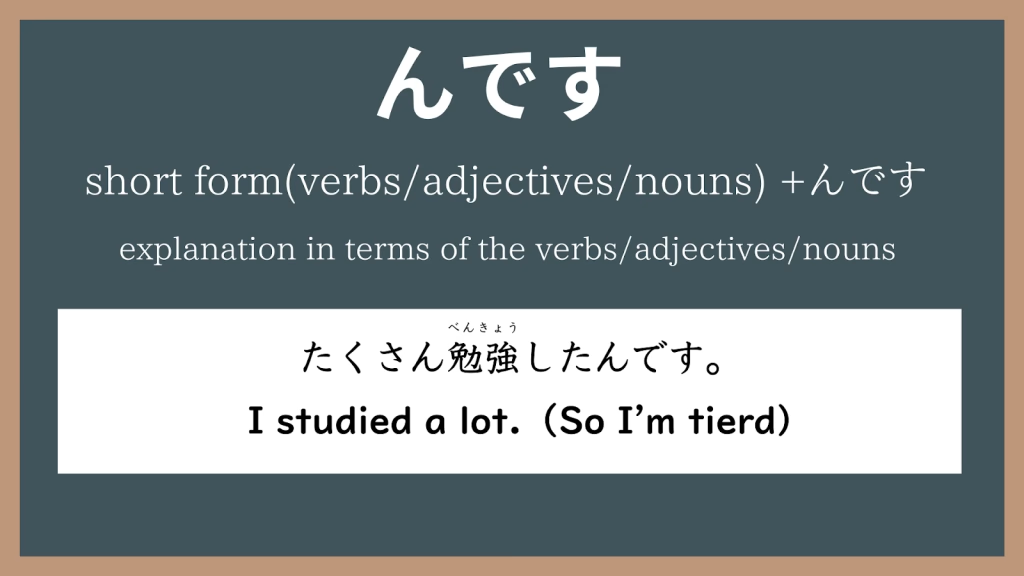
んです (more formal: のです) adds a feeling of explanation. Use it to give a reason or background, or to ask about one when you are curious or surprised.
Before んです, use the short form. For な-adjectives and nouns, use な: 好きなんです, 学生なんです.
んです is very common in conversation, but it is about explaining. If you just state a fact with no special situation, use the normal form: 私は学生です (not 学生なんです).
Final check: 10 questions
These questions mix から, ので and んです. Get 8 or more right, and you are ready for the next lesson.
Free worksheet
Want to practice writing? Download the printable worksheet for this lesson.
What’s next
- GENKI Lesson 12: advice and obligation with ほうがいい and なければいけません
- GENKI Lesson 11: 〜たことがある and 〜たり
- は vs が
Practice speaking with a real teacher
んです makes your Japanese sound much more natural, but it takes practice. Ask a teacher to point out when you should use it. On italki, you can find teachers who use GENKI and book a short trial lesson.
This is an affiliate link. If you book a lesson, I may earn a small commission at no extra cost to you.