Japanese ほうがいい, なければいけません and すぎる (GENKI Lesson 12)
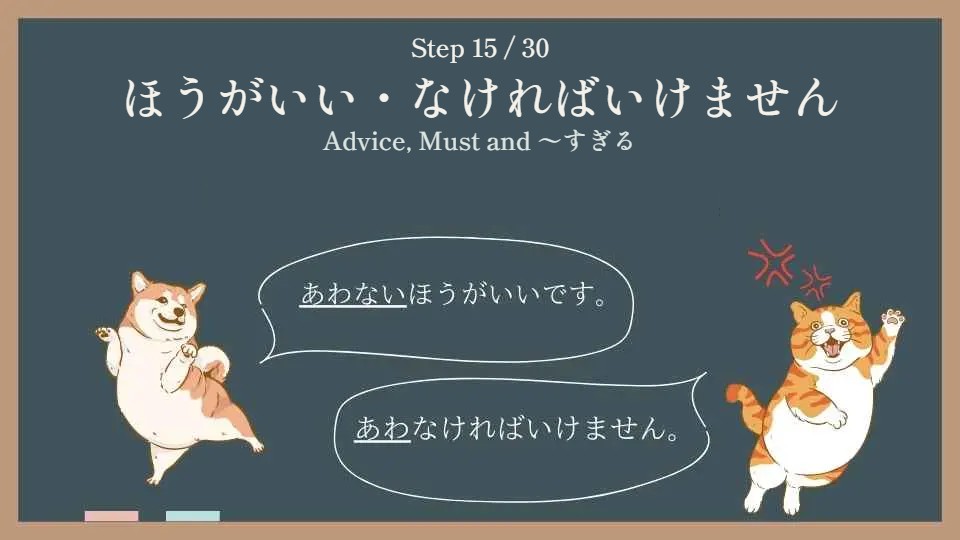
In GENKI Lesson 12, you learn how to give advice (“you should …”), talk about obligations (“I have to …”), and say something is too much (“I ate too much”). These are perfect for talking about health, school and daily problems.
- 〜たほうがいいです / 〜ないほうがいいです: you should / shouldn’t
- 〜なければいけません: must, have to
- 〜すぎる: too much
Contents
Advice: 〜ほうがいいです
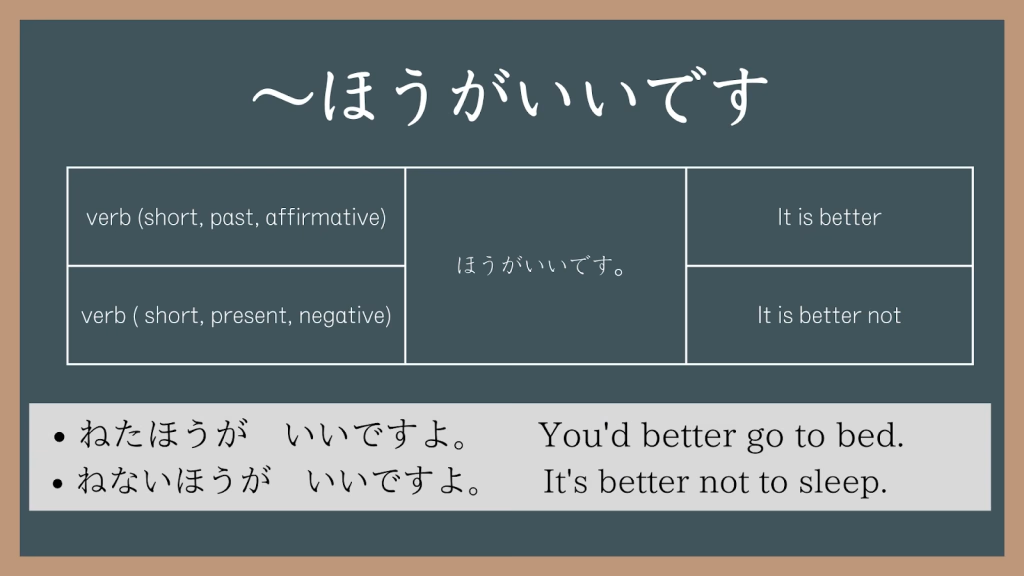
| Advice | Form | Example |
|---|---|---|
| You should … | past short form (た) + ほうがいいです | 薬を飲んだほうがいいですよ。くすりを のんだ ほうが いいですよ。 (You should take medicine.) |
| You shouldn’t … | ない form + ほうがいいです | お酒を飲まないほうがいいですよ。おさけを のまない ほうが いいですよ。 (You shouldn’t drink alcohol.) |
For “should,” use the past form (飲んだ), even though the advice is about now or the future. For “shouldn’t,” use the present ない form (飲まない), not 飲まなかった.
Adding よ at the end makes the advice sound kind and natural.
Must: 〜なければいけません
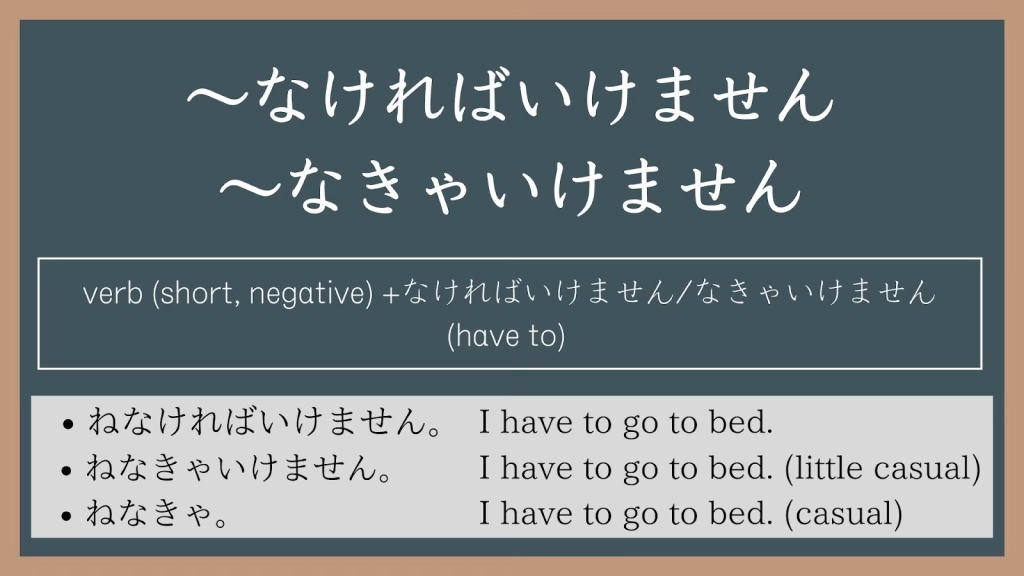
Take the ない form, change ない to なければ, and add いけません. Literally, “if I don’t do it, it’s no good.”
| ない form | must do | Meaning |
|---|---|---|
| 行かないいかない | 行かなければいけませんいかなければ いけません | I must go |
| 食べないたべない | 食べなければいけませんたべなければ いけません | I must eat |
| しないしない | しなければいけませんしなければ いけません | I must do |
People often shorten it to 〜なきゃいけない or just 〜なきゃ: もう行かなきゃ (I have to go now). You may also hear 〜なければなりません, which is more formal.
Too much: 〜すぎる
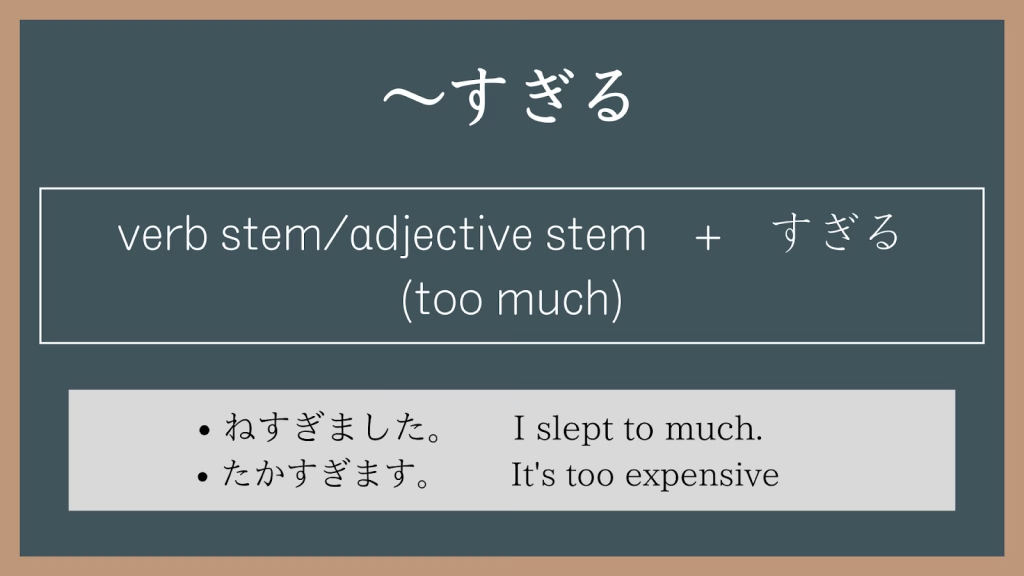
すぎる means “too much.” Attach it to a verb stem or an adjective. すぎる itself is a る-verb (すぎます, すぎました).
| Type | Rule | Example |
|---|---|---|
| verb | drop ます + すぎる | 食べすぎましたたべすぎました (I ate too much.) |
| い-adjective | drop い + すぎる | この部屋は狭すぎますこのへやは せますぎます (This room is too small.) |
| な-adjective | drop な + すぎる | この町は静かすぎますこのまちは しずかすぎます (This town is too quiet.) |
いい becomes よすぎる: 天気がよすぎて、勉強したくない (The weather is too nice to study).
Put it together
Combine the patterns with から and ので to give complete advice.
Final check: 10 questions
These questions mix everything from Lesson 12. Get 8 or more right, and you are ready for potential verbs in Lesson 13.
Free worksheet
Want to practice writing? Download the printable worksheet for GENKI Lesson 12.
What’s next
- GENKI Lesson 13: potential verbs, 〜し and なら
- から, ので and んです: giving reasons
- GENKI Lesson 9: review the た form
Practice speaking with a real teacher
Advice and obligations come up in every conversation. Tell a teacher about your week: 今週は忙しすぎます。金曜日までにレポートを書かなければいけません。 On italki, you can find teachers who use GENKI and book a short trial lesson.
This is an affiliate link. If you book a lesson, I may earn a small commission at no extra cost to you.