Japanese Potential Form (Can Do), 〜し and なら (GENKI Lesson 13)
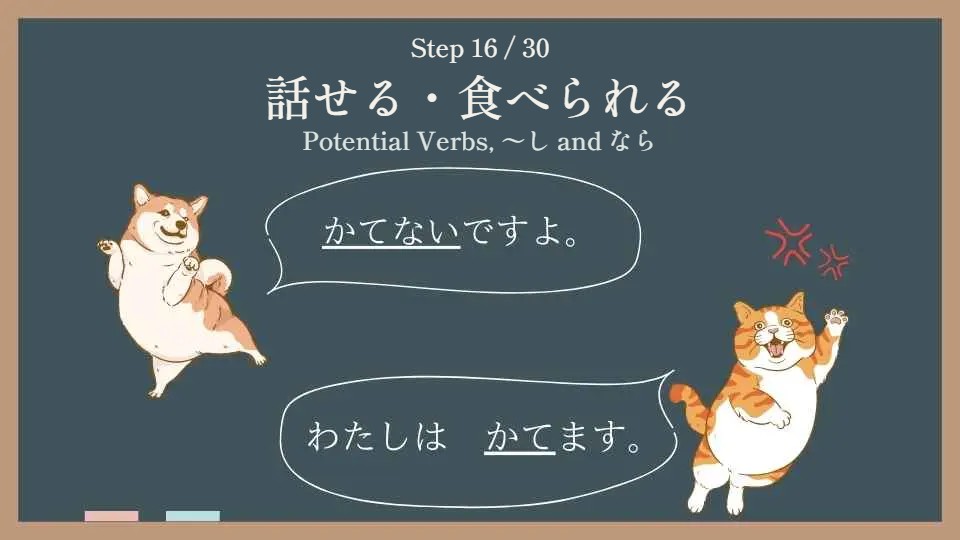
In GENKI Lesson 13, you learn how to say what you can do: speak Japanese, swim, eat spicy food. You also learn two ways to connect ideas: 〜し to give several reasons, and なら to make a suggestion about a topic someone just mentioned.
- The potential form: can do
- Why を often changes to が
- 〜し、〜し: listing reasons
- Noun + なら: if it’s …, then …
Contents
The potential form: can do
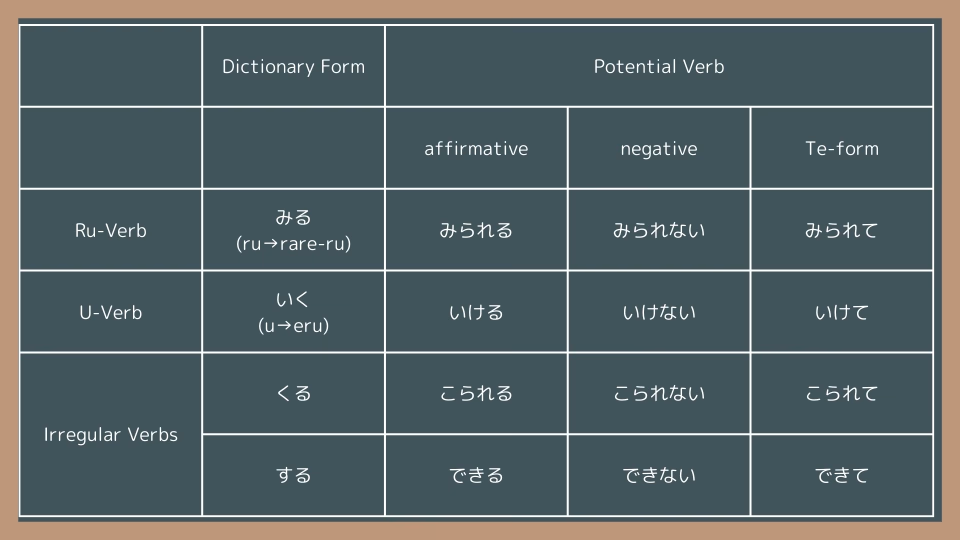
| Verb group | Rule | Example |
|---|---|---|
| う-verbs | last sound → え sound + る | 話す → 話せる、行く → 行けるはなす → はなせる、いく → いける |
| る-verbs | drop る → られる | 食べる → 食べられるたべる → たべられる |
| する | する → できるする → できる | |
| 来る | 来る → 来られるくる → こられる |
Every potential verb is a る-verb, so you conjugate it like 食べる: 話せます, 話せない, 話せた, 話せて.
The particle often changes to が
With a potential verb, the object is usually marked with が instead of を. Other particles (に, で …) don’t change.
In everyday speech, many people say 食べれる and 来れる (without ら). You will hear it a lot, but in tests and polite writing, use 食べられる and 来られる.
〜し: listing reasons
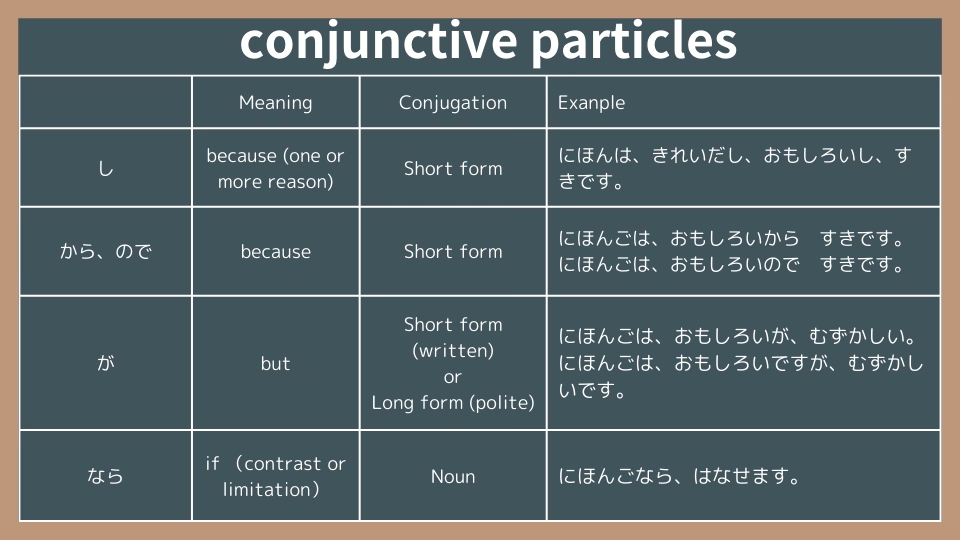
し lists reasons, and suggests there could be more. Put it after the short form. な-adjectives and nouns take だ.
The conclusion can come first, with the reasons after it, like the last example. This is very common in conversation.
なら: if it’s …, then …
Noun + なら picks up a topic the other person just mentioned and adds your comment or suggestion about that.
なら also works with negative ideas: 肉は食べません。— 魚なら食べられますか。 (I don’t eat meat. — How about fish? Can you eat fish?)
Learn more about “if” in Japanese in 〜たら, the most useful “if”.
Final check: 10 questions
These questions mix everything from Lesson 13. Get 8 or more right, and you are ready for the next lesson.
Free worksheet
Want to practice writing? Download the printable worksheet for GENKI Lesson 13.
What’s next
- かもしれません, でしょう, はず and に違いない: how sure are you?
- GENKI Lesson 12: ほうがいい and なければいけません
- 〜たら: the most useful “if”
Practice speaking with a real teacher
Tell a teacher what you can and can’t do in Japanese: ひらがなは読めます。でも、漢字はまだあまり読めません。 On italki, you can find teachers who use GENKI and book a short trial lesson.
This is an affiliate link. If you book a lesson, I may earn a small commission at no extra cost to you.