Japanese 〜たら: The Most Useful “If” and “When” (GENKI Lesson 17)
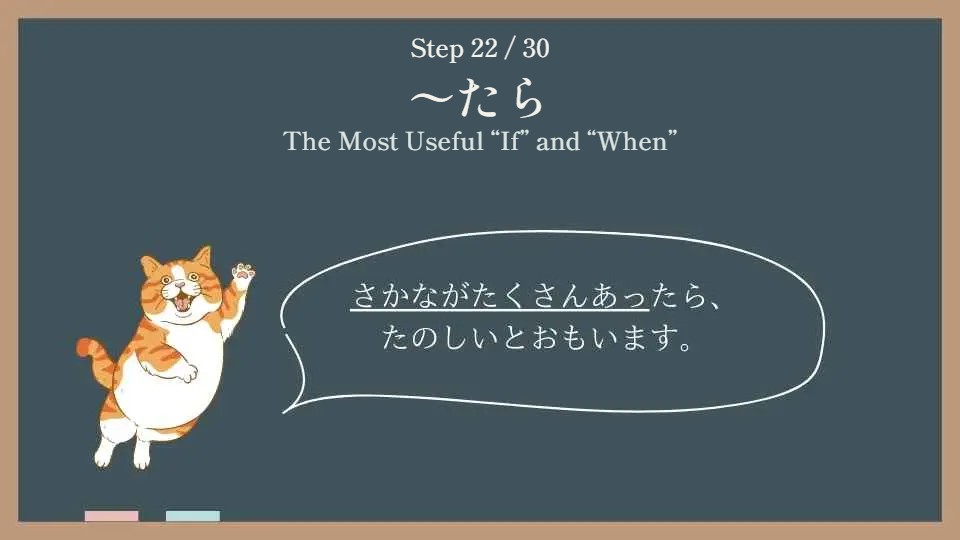
Japanese has several ways to say “if”: と, ば, なら and たら. If you can learn only one, learn 〜たら. It works in almost every situation, and you can put requests, invitations and plans after it. You learn it in GENKI Lesson 17.
- How to make the たら form
- “If …” and “when / after …”
- Discoveries: “When I …, (I found that) …”
- Advice with 〜たらどうですか
- たら vs と, ば and なら
Contents
How to make 〜たら
Take the past short form and add ら. If you know the た form, you already know たら.
| Type | Past short form | たら form |
|---|---|---|
| verb | 行ったいった | 行ったらいったら |
| verb (negative) | 行かなかったいかなかった | 行かなかったらいかなかったら |
| い-adjective | 安かったやすかった | 安かったらやすかったら |
| な-adjective | 暇だったひまだった | 暇だったらひまだったら |
| noun | 雨だったあめだった | 雨だったらあめだったら |
Use 1: “If …”
Something that may or may not happen. You can add もし (if) at the beginning for emphasis.
Use 2: “When / after …”
Something that will happen. The second part happens after the first is finished.
After たら, you can use requests (〜てください), invitations (〜ましょう), wishes (〜たい) and plans. Many other “if” forms can’t do this.
Use 3: Discoveries
When the second part is in the past, たら means “When I did A, (I found / it turned out) B.” B is often a surprise.
Use 4: Advice with 〜たらどうですか
〜たらどうですか means “Why don’t you …?” It is a friendly suggestion (GENKI Lesson 14). Casually: 〜たら?
たら vs と, ば and なら
| Form | Main use | Request / invitation after it? |
|---|---|---|
| たら | If, when, discoveries. The most flexible. | Yes |
| と | Always / naturally: 春になると、暖かくなる (When spring comes, it gets warm). | No |
| ば | General conditions: 安ければ買います (If it’s cheap, I’ll buy it). | Only in some cases |
| なら | Picking up a topic: 京都なら、清水寺がいい (If it’s Kyoto, Kiyomizu-dera is good). | Yes |
If you are not sure which one to use, たら is usually a safe choice. Learn なら in GENKI Lesson 13.
For “even if,” use 〜ても, not たら: 雨が降っても、行きます (Even if it rains, I’ll go).
Final check: 10 questions
Get 8 or more right, and you can use たら with confidence!
What’s next
- Transitive and intransitive verbs: 開く vs 開ける
- GENKI Lesson 13: なら and potential verbs
- GENKI Lesson 9: review the た form
Practice speaking with a real teacher
“What would you do if …?” questions make great conversation practice. Ask a teacher: 宝くじが当たったら、何をしますか。 On italki, you can find teachers who use GENKI and book a short trial lesson.
This is an affiliate link. If you book a lesson, I may earn a small commission at no extra cost to you.