Japanese 〜たことがある and 〜たり〜たりする: Experiences (GENKI Lesson 11)
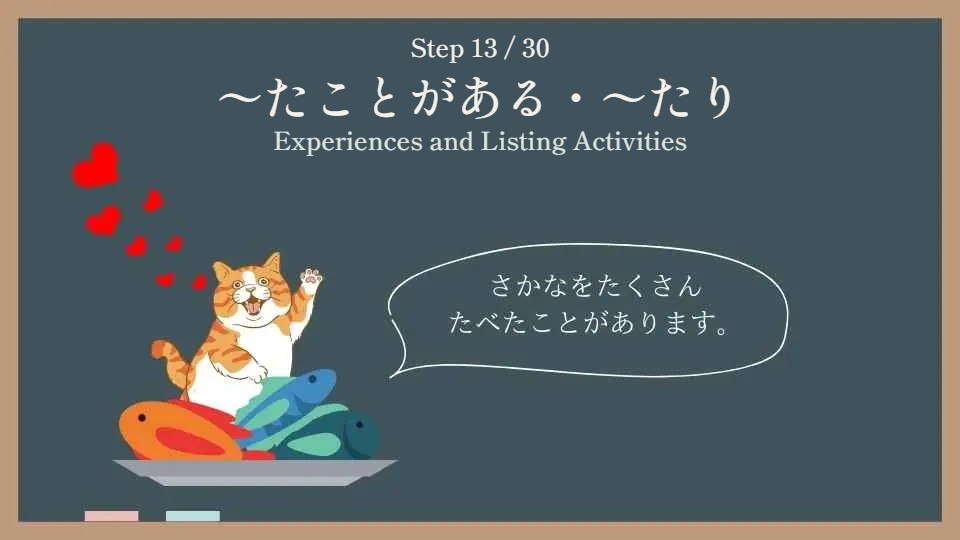
In GENKI Lesson 11, you learn how to talk about your experiences (“I have been to Japan”) and how to give examples of things you do (“On weekends, I read books, watch movies, and so on”). These patterns all use the た form you learned in Lesson 9.
- 〜たことがある: have done … before
- 〜たり〜たりする: do things like A and B
- AやB: A, B and so on
Contents
〜たことがある: experiences
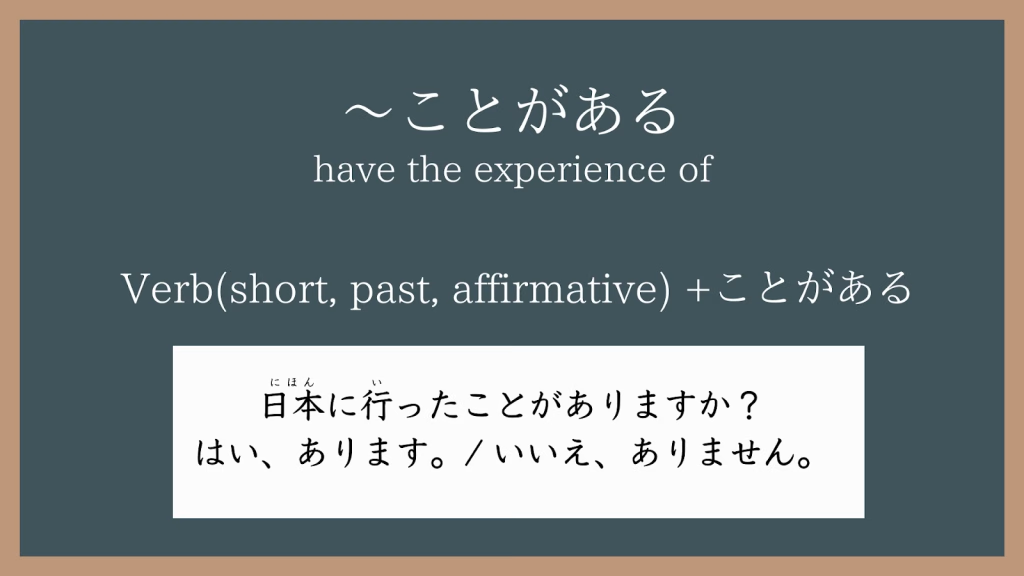
Use the past short form (た form) + ことがあります to say you have done something at least once in your life.
Use 〜たことがある for life experiences. For things that happened at a specific time, use the normal past: 昨日すしを食べました (I ate sushi yesterday), not 昨日すしを食べたことがあります.
〜たり〜たりする: things like A and B
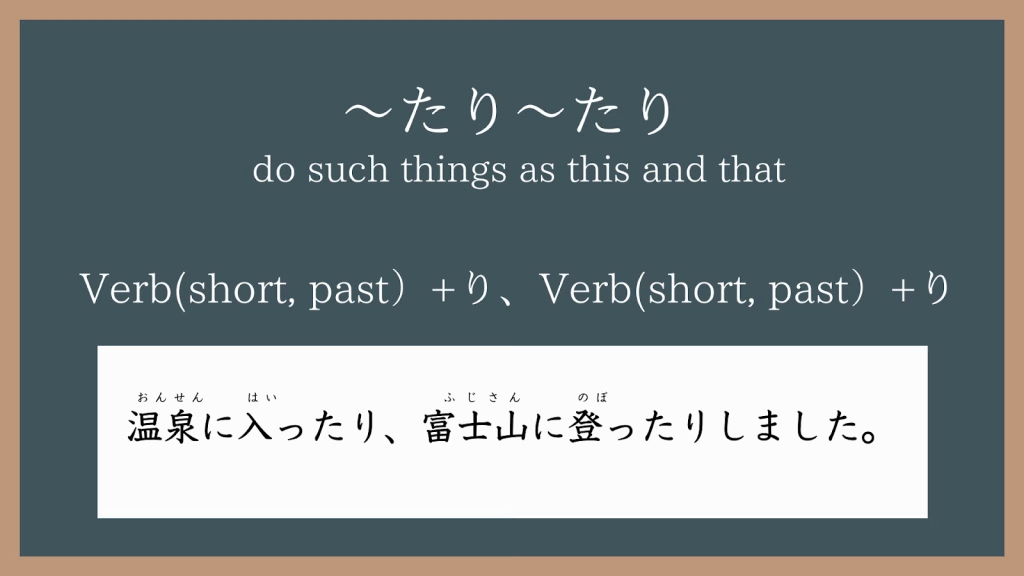
Add り to the た form of two (or more) verbs, and end with する. It means you do things like A and B, among others. The tense goes on する at the end.
The sentence must end with する (します, しました…). ✗ 本を読んだり、映画を見たりです。
AやB: examples of nouns
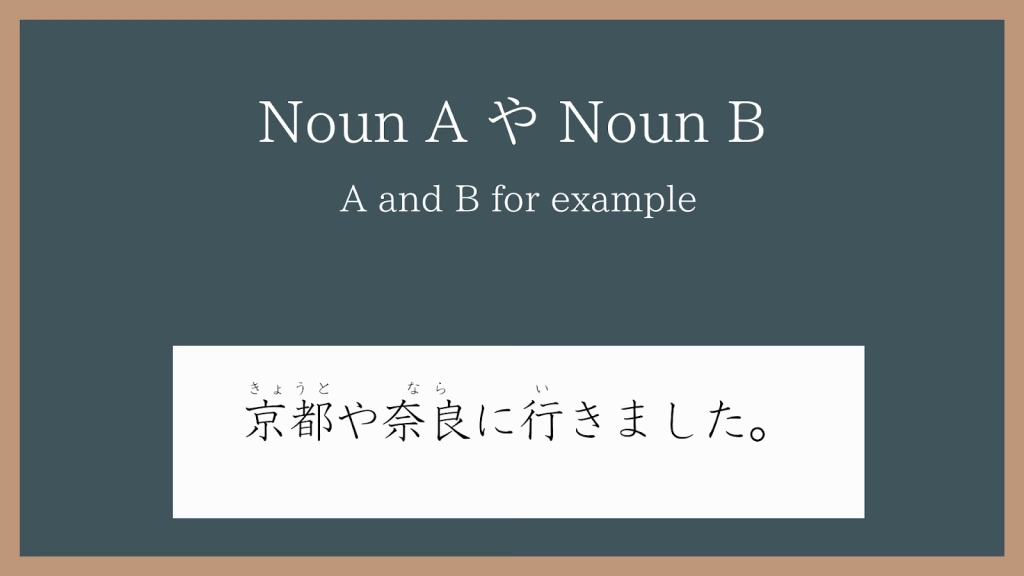
や is like たり for nouns. It lists examples and suggests there are more. など (and so on) is often added after the last one.
| Particle | Meaning | Example |
|---|---|---|
| とと | A and B (that’s all) | 本とペンがあります。ほんと ペンが あります。 (There are a book and a pen.) |
| やや | A, B and others | 本やペンがあります。ほんや ペンが あります。 (There are books, pens, etc.) |
Final check: 8 questions
These questions mix everything from this page. Get 7 or more right, and you are ready for the next lesson.
Free worksheet
Want to practice writing? Download the printable worksheet for GENKI Lesson 11.
What’s next
- Giving reasons: から, ので and んです
- 〜たい and ほしい: saying what you want
- Cebu travel diary: read about a trip (JLPT N4)
Practice speaking with a real teacher
“Have you ever …?” is a perfect way to start a conversation. Ask a teacher: 日本の温泉に入ったことがありますか。 On italki, you can find teachers who use GENKI and book a short trial lesson.
This is an affiliate link. If you book a lesson, I may earn a small commission at no extra cost to you.