Kite Kurete Arigatou Meaning: 〜てくれてありがとう & 〜てすみません (GENKI Lessons 16, 19)
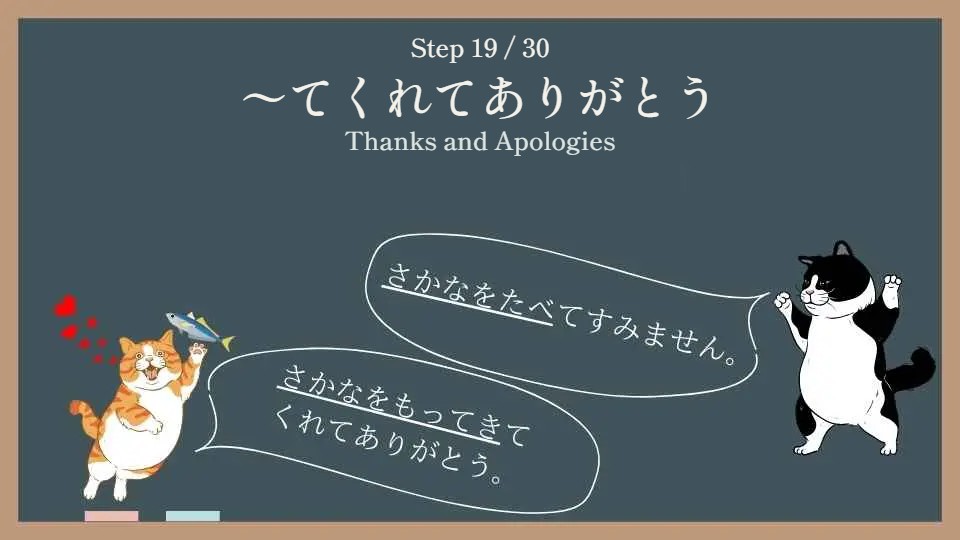
ありがとう and すみません are some of the first words you learn. But Japanese people often say what they are thankful or sorry for. With the te-form, you can say “Thank you for helping me” and “Sorry for being late.” This sounds much warmer and more natural.
GENKI teaches 〜てすみませんでした in Lesson 16 and 〜てくれてありがとう in Lesson 19.
- 〜てくれてありがとう: thank you for doing … for me
- Polite version: 〜てくださってありがとうございます
- 〜て(しまって)すみません: sorry for …
Common phrases at a glance
| Romaji | Japanese | Meaning |
|---|---|---|
| kite kurete arigatou | 来てくれてありがとう | Thank you for coming. |
| oshiete kurete arigatou | 教えてくれてありがとう | Thank you for teaching me. |
| tasukete kurete arigatou | 助けてくれてありがとう | Thank you for helping me. |
| kiite kurete arigatou | 聞いてくれてありがとう | Thank you for listening. |
| osoku natte sumimasen | 遅くなってすみません | Sorry I'm late. |
Contents
〜てくれてありがとう: thank you for …
You know 〜てくれる means someone did something for you. Change くれる to its te-form くれて and add ありがとう.
Polite: 〜てくださってありがとうございます
With a teacher, a boss or a customer, use くださる (the polite くれる) and ありがとうございます.
| Casual (friends, family) | Polite (teachers, customers) |
|---|---|
| 手伝ってくれてありがとう。てつだって くれて ありがとう。 | 手伝ってくださってありがとうございます。てつだって くださって ありがとうございます。 |
| 待ってくれてありがとう。まって くれて ありがとう。 | お待ちくださってありがとうございます。おまち くださって ありがとうございます。 |
For something already done, ありがとうございました is also common: 今日は来てくださって、ありがとうございました (Thank you for coming today).
〜てすみません: sorry for …
Use the te-form of what you did, then すみません (or すみませんでした for the past). 〜てしまって adds a feeling of regret: “I didn’t mean to.”
For “sorry for not doing,” use 〜なくて: 宿題をしなくてすみません (Sorry I didn’t do my homework).
すみません as a thank-you
When someone does something for you and it was trouble for them, Japanese people often say すみません instead of (or together with) ありがとう. It means “sorry for the trouble, and thank you.”
Which one should I use?
| Situation | Say |
|---|---|
| A friend lent you an umbrella. | 傘を貸してくれてありがとう。かさを かして くれて ありがとう。 |
| You arrived late to a meeting. | 遅れてすみません。おくれて すみません。 |
| Your boss stayed late to help you. | 遅くまで手伝ってくださって、すみません。ありがとうございます。おそくまで てつだって くださって、すみません。ありがとうございます。 |
| You forgot to reply to an email. | 返事が遅くなってしまって、すみません。へんじが おそく なって しまって、すみません。 |
Final check: 8 questions
Choose what to say in each situation. Get 7 or more right, and you are ready to thank and apologize like a native speaker.
What’s next
- The volitional form: 〜ようと思っています
- あげる, くれる and もらう: review giving and receiving
- Sonkeigo: くださる and other respectful verbs
Practice speaking with a real teacher
Thanks and apologies sound best in real situations. At the end of your next lesson, try: 今日は教えてくださって、ありがとうございました。 On italki, you can find friendly Japanese teachers and book a short trial lesson.
This is an affiliate link. If you book a lesson, I may earn a small commission at no extra cost to you.