Kenjougo (Kenjōgo): Japanese Humble Verbs like Mairu, Itadaku & Ukagau (GENKI Lesson 20)
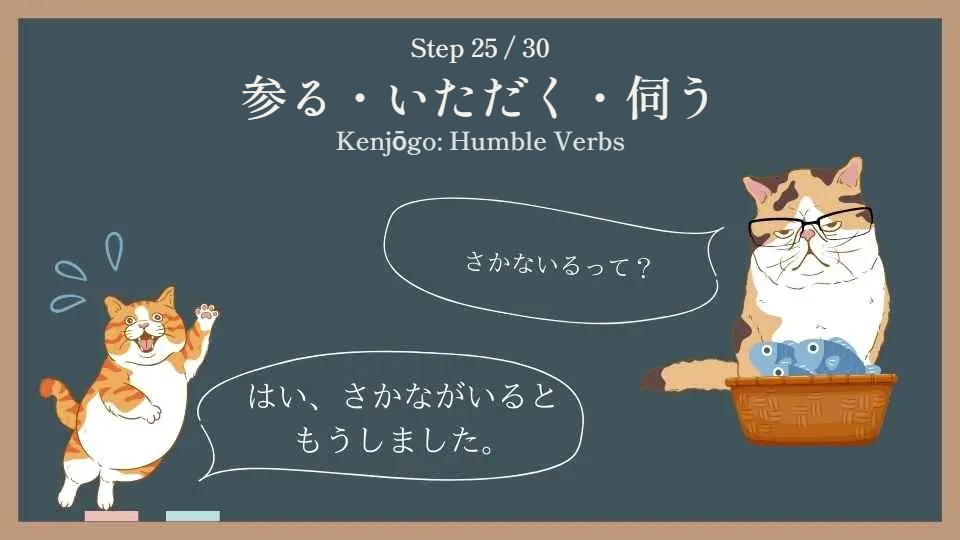
Kenjōgo (謙譲語) is humble language. You use it to talk about your own actions (or your company’s) to someone you respect. By lowering yourself, you show respect to the other person. It is essential for business, job interviews and customer service. You learn it in GENKI Lesson 20.
If you haven’t studied sonkeigo yet, start with Sonkeigo.
- Special humble verbs: 参る, 申す, いただく, 伺う, 拝見する …
- The regular pattern: お / ご + stem + する
- Very polite expressions: おります and でございます
- Kenjōgo vs sonkeigo
Contents
Kenjōgo vs sonkeigo
| Sonkeigo (respectful) | Kenjōgo (humble) | |
|---|---|---|
| Whose action? | The other person’s | Yours (or your group’s) |
| Effect | Raises them | Lowers you |
| “to come” | 先生がいらっしゃいます。せんせいが いらっしゃいます。 | 私が参ります。わたしが まいります。 |
| “to eat” | どうぞ召し上がってください。どうぞ めしあがって ください。 | いただきます。いただきます。 |
Special humble verbs
| Plain | Kenjōgo | Example |
|---|---|---|
| する | いたすいたす (itasu) | 私が担当いたします。わたしが たんとう いたします。 (I will be in charge.) |
| 行く / 来る | 参るまいる (mairu) | すぐに参ります。すぐに まいります。 (I’ll come right away.) |
| 行く (visit) / 聞く (ask) | 伺ううかがう (ukagau) | 明日、御社に伺います。あした、おんしゃに うかがいます。 (I will visit your company tomorrow.) |
| いる | おるおる (oru) | 三時まで会社におります。さんじまで かいしゃに おります。 (I’ll be at the office until three.) |
| 言う | 申すもうす (mousu) | 田中と申します。たなかと もうします。 (My name is Tanaka.) |
| 食べる / 飲む / もらう | いただくいただく (itadaku) | お土産をいただきました。おみやげを いただきました。 (I received a souvenir.) |
| あげる | さしあげるさしあげる (sashiageru) | 先生に花をさしあげました。せんせいに はなを さしあげました。 (I gave flowers to my teacher.) |
| 見る | 拝見するはいけんする (haiken suru) | 資料を拝見しました。しりょうを はいけん しました。 (I looked at the documents.) |
| 会う | お目にかかるおめにかかる (o-me ni kakaru) | お目にかかれて光栄です。おめに かかれて こうえいです。 (It’s an honor to meet you.) |
| 知っている | 存じているぞんじている (zonjite iru) | その件は存じております。その けんは ぞんじて おります。 (I am aware of that matter.) |
The regular pattern: お / ご + stem + する
For other verbs, put the ます stem between お and する (or the even humbler いたす). Use it when you do something for the other person.
お〜する is humble (my action). お〜になる is honorific (their action). お待ちします = I will wait. お待ちになります = (you / the customer) will wait.
Very polite speech: おります and でございます
In business and customer service, people also use 〜ております instead of 〜ています, and でございます instead of です.
でございます is technically “very polite language” (丁寧語) rather than humble language, but you hear it together with kenjōgo all the time, especially in shops and on the phone.
When to use kenjōgo
- Use it for your own actions when talking to customers, bosses, teachers and people outside your company.
- Also use it for your own family or company when talking to outsiders: 父が参ります, 部長の田中は今、外出しております.
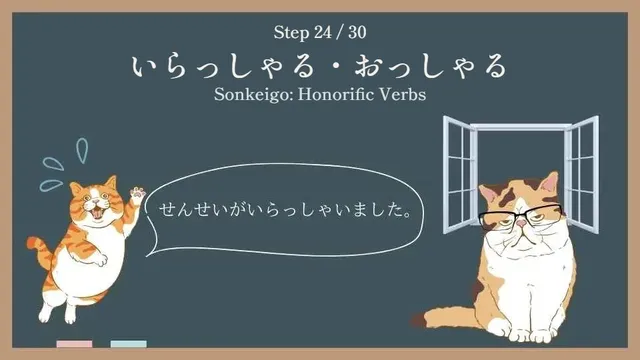
- Never use it for the other person’s actions. ✗ 先生が参りました → ✓ 先生がいらっしゃいました.
- With friends and family, keigo sounds cold or sarcastic. Use normal speech.
Final check: 10 questions
Get 8 or more right, and your keigo is ready for the real world!
What’s next
- The passive: 〜られる
- Sonkeigo: review respectful verbs
- 〜てくれてありがとう: thanking politely
Practice speaking with a real teacher
Keigo is much easier after a few role-plays. Ask a teacher to practice a phone call or a job interview with you. On italki, you can find teachers who specialize in business Japanese and book a short trial lesson.
This is an affiliate link. If you book a lesson, I may earn a small commission at no extra cost to you.